Tail Lifts for Commercial Vehicles

Tail lifts are hydraulically powered lifting platforms fitted to the rear of rigid vehicles and trailers to enable safe loading and unloading at ground level. They reduce reliance on fixed loading bays and support efficient handling in urban, retail and multi-drop distribution environments.

In commercial vehicle bodywork, tail lifts are integrated into the rear structure and specified according to vehicle type, duty cycle, load capacity and operational environment. Selection depends on payload requirements, platform size, stowage arrangement and compatibility with the rear frame and doors.

What a Tail Lift Does

A tail lift bridges the height difference between the vehicle load floor and the ground. Using hydraulic rams powered by an electric pump and battery system, the platform lowers to ground level, receives the load, then raises it to deck height for transfer into the body.

This supports manual handling reduction, improves delivery efficiency and enables operation where loading docks are not available.

Common Tail Lift Configurations

Commercial vehicle tail lifts are available in several main configurations, each designed around different vehicle layouts and loading operations.

Tuckaway

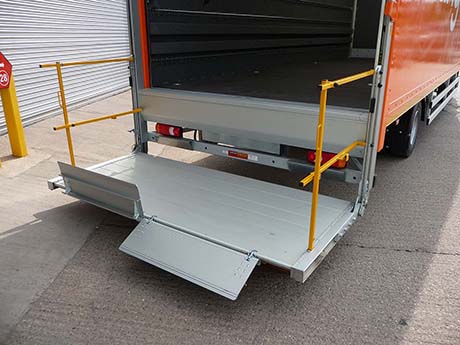
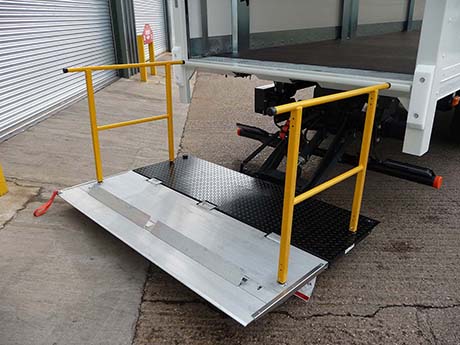
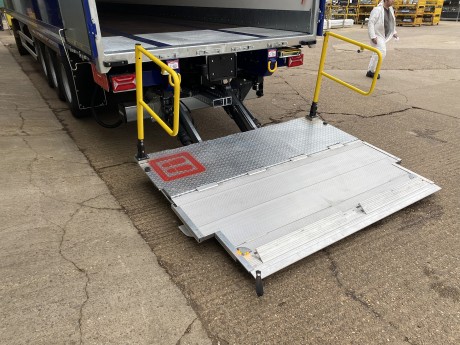
Tuckaway tail lifts use folding platforms that stow in a compact position beneath the chassis behind the rear axle area. They are commonly used where rear access needs to remain relatively unobstructed when the lift is not in use.

Column

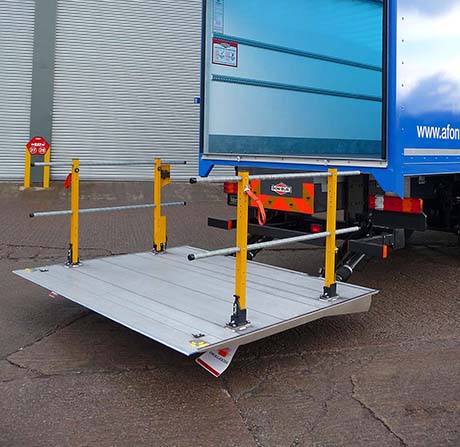
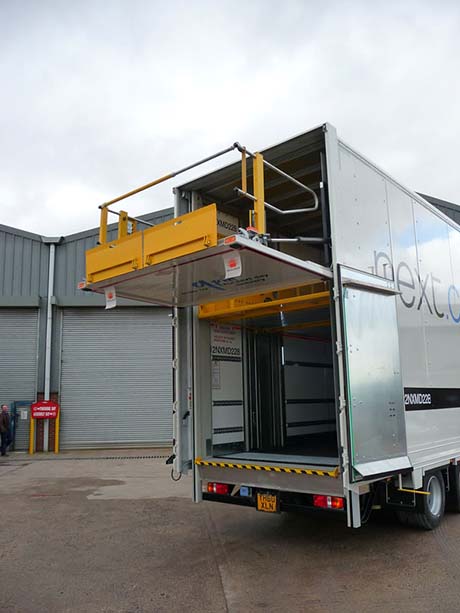
Column tail lifts operate on vertical guide columns mounted to the rear frame. Standard versions use a simple platform arrangement, while two-tier systems are commonly specified for double deck operations where loads may need to be transferred between ground level and upper deck positions.

Retractable

Retractable tail lifts typically use a one-piece platform that slides out from beneath the rear overhang. These systems generally require sufficient chassis space between the rear axle and rear frame, although folding platform versions are also available.

Cantilever

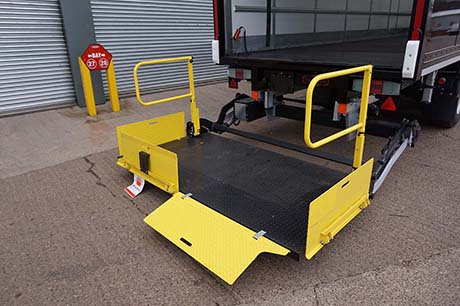
Cantilever tail lifts generally use large platforms that stow vertically to form the rear closure. During operation, the platform rotates into a horizontal position to lift loads between ground level and the vehicle deck.

Each configuration affects rear aperture access, ground clearance, rear closure design and operational workflow.

Integration with Vehicle Bodywork

Proper integration requires structural reinforcement of the rear frame, electrical provision for charging and control systems, and consideration of axle loading and overall vehicle weight distribution. Tail lift selection must align with plated capacity and operational use to maintain compliance and durability.

Specification decisions are typically made alongside body design to ensure compatibility with curtainsiders, box vans, temperature-controlled bodies and other specialist configurations.

Don-Bur (Bodies & Trailers) Ltd

phone icon
Call us
+44(0)1782 599 666