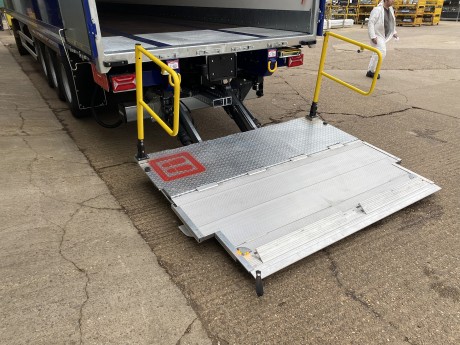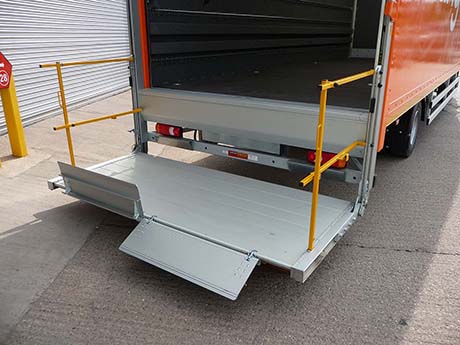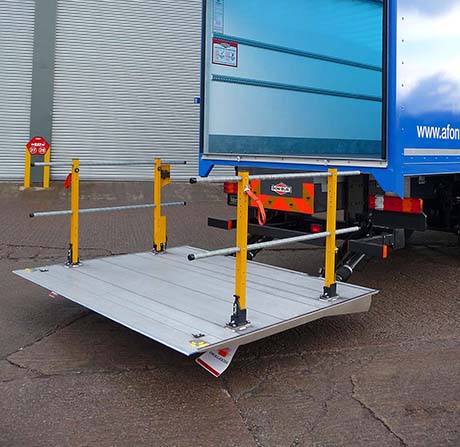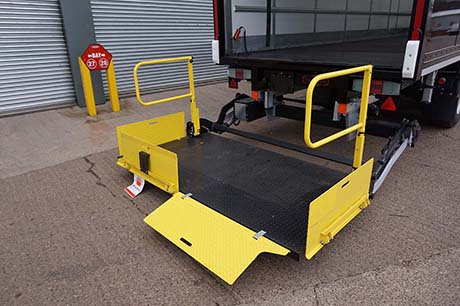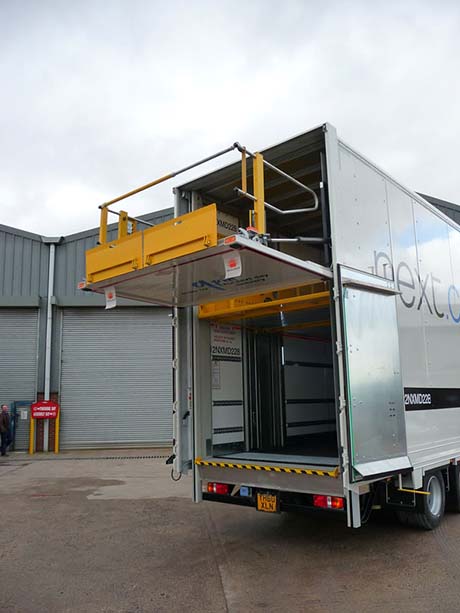
A tuck-away tail-lift is used where rear stowage space is limited and clear rear access is needed when the lift is not in use.
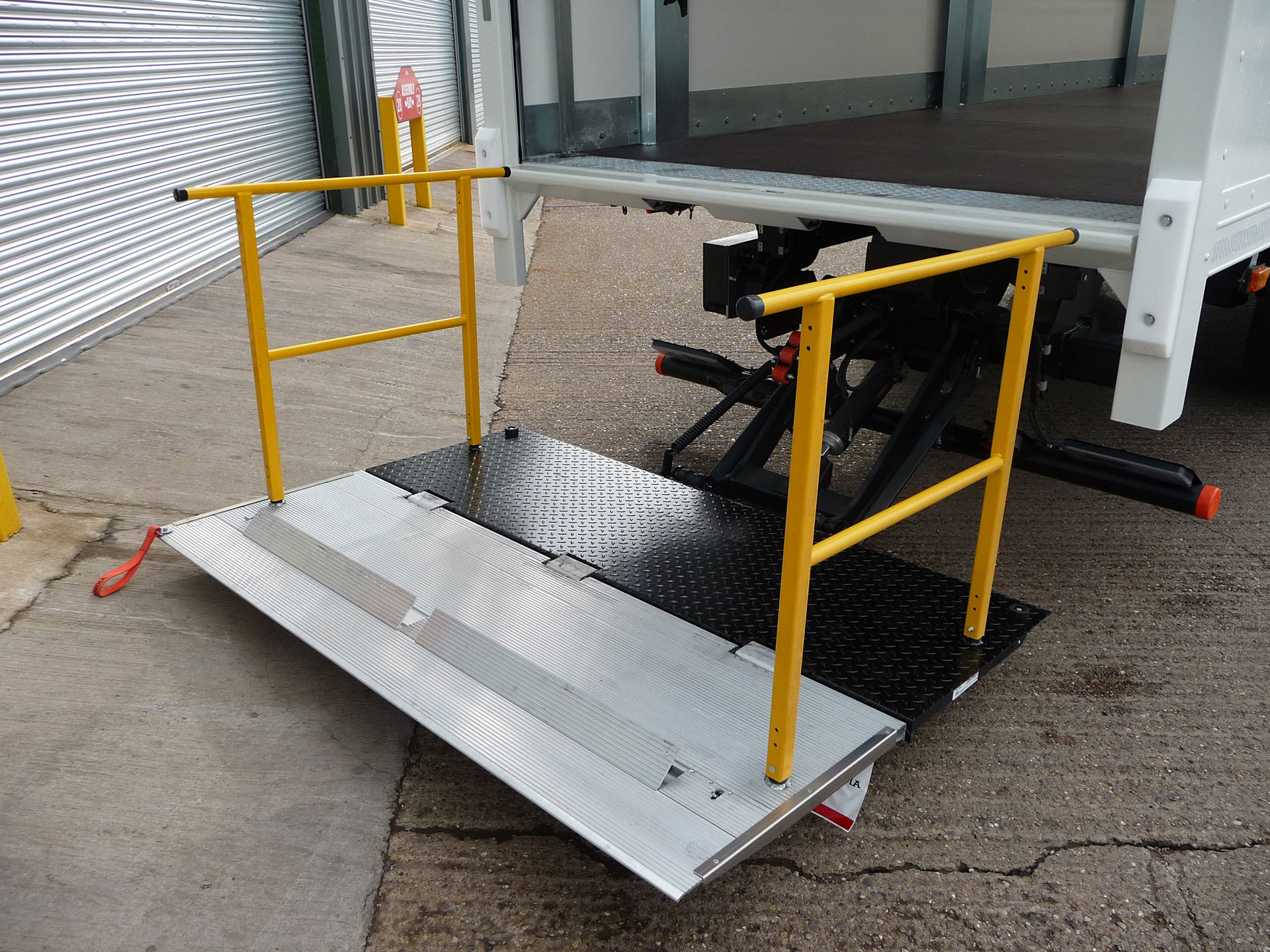
The split platform folds out from beneath the vehicle and can be angled at the rear to help with loading roll cages and pallet trucks.
Side safety gate options are available to improve operator safety during loading and unloading.
Platform sizes and lifting capacities vary to suit different vehicle specifications and operating requirements.
To enhance our content, some features in the Don-Bur library may include information from trusted third parties. We encourage you to perform your own research and seek additional advice before making any investment or financial decisions based on the information provided. Don-Bur assumes no responsibility for the accuracy, completeness, or timeliness of third-party information.
How a tuck-away tail-lift works
A tuck-away tail-lift is mounted beneath the rear of the vehicle chassis and remains concealed when not in use. When deployed, the split platform folds down from its stowed position and opens out to form a full loading surface.
The platform can be angled slightly at ground level, which helps when loading wheeled equipment such as roll cages and pallet trucks. Once loaded, the hydraulic system raises the platform to bed height for transfer into the vehicle body.
After use, the platform folds back into sections and retracts neatly under the vehicle, leaving the rear aperture clear for normal loading or docking operations.
This configuration is commonly used where rear access must remain unobstructed when the tail-lift is not required.
Typical applications and considerations
Tuck-away tail-lifts are suited to multi-drop delivery operations where space efficiency and flexibility are important. Because the lift is stowed beneath the body, it does not interfere with loading bays or restrict access to the rear doors.
Platform size and lifting capacity vary depending on the vehicle and duty cycle. Split platforms are often specified to balance compact stowage with sufficient working area when deployed.
Optional safety features include side safety gates, which help prevent falls during loading and unloading. Selection should consider load type, operator use, and site conditions.