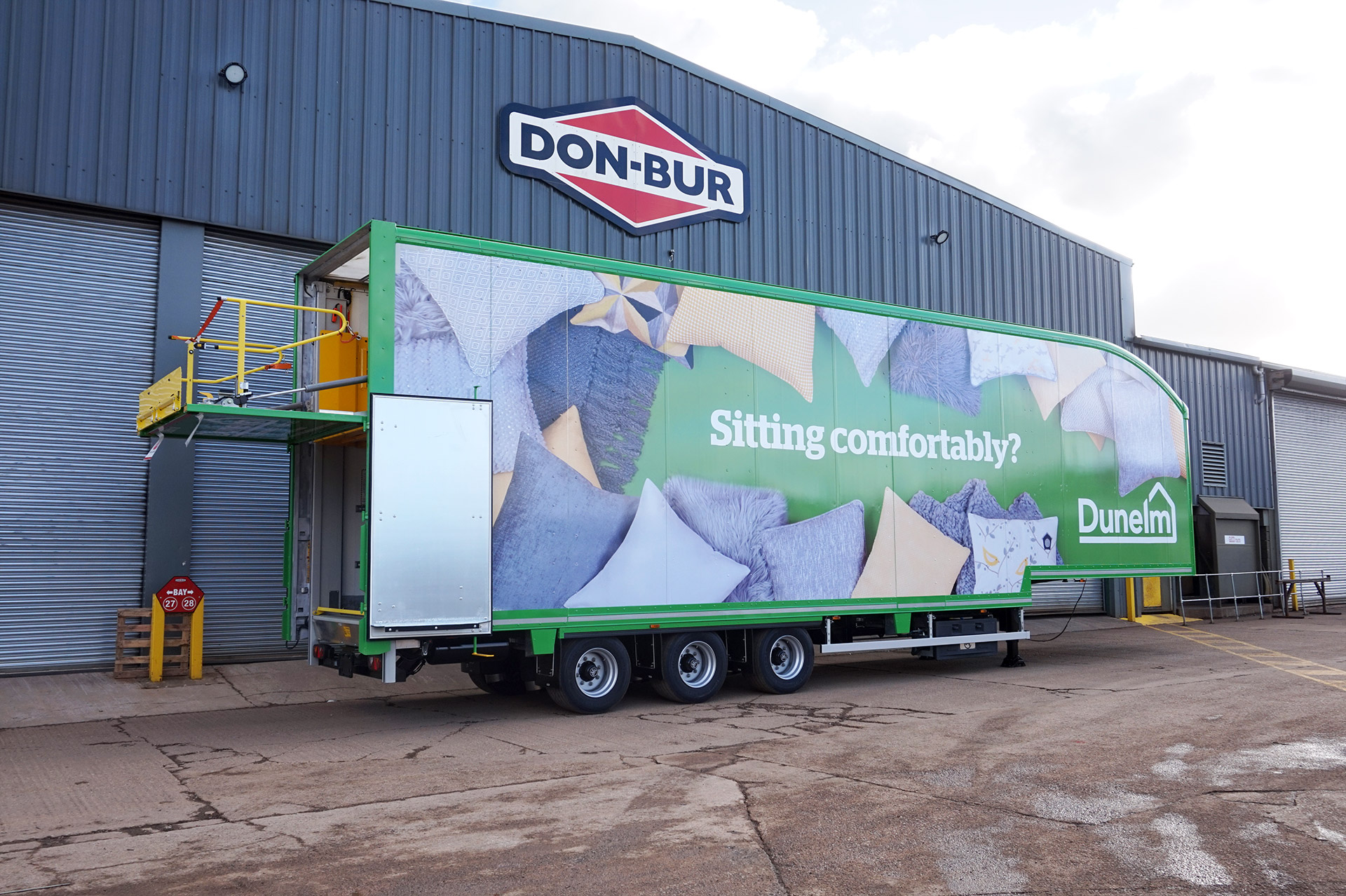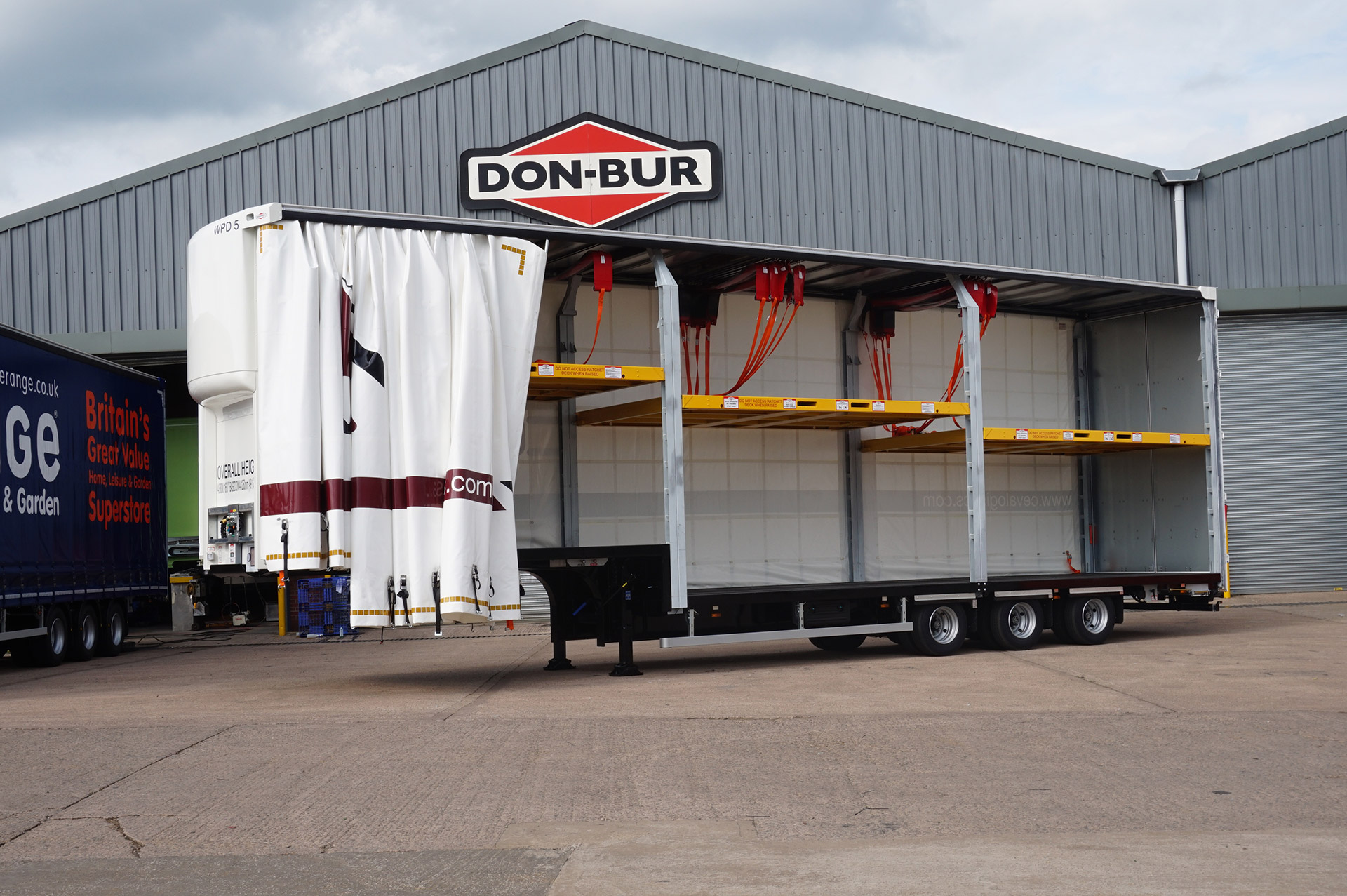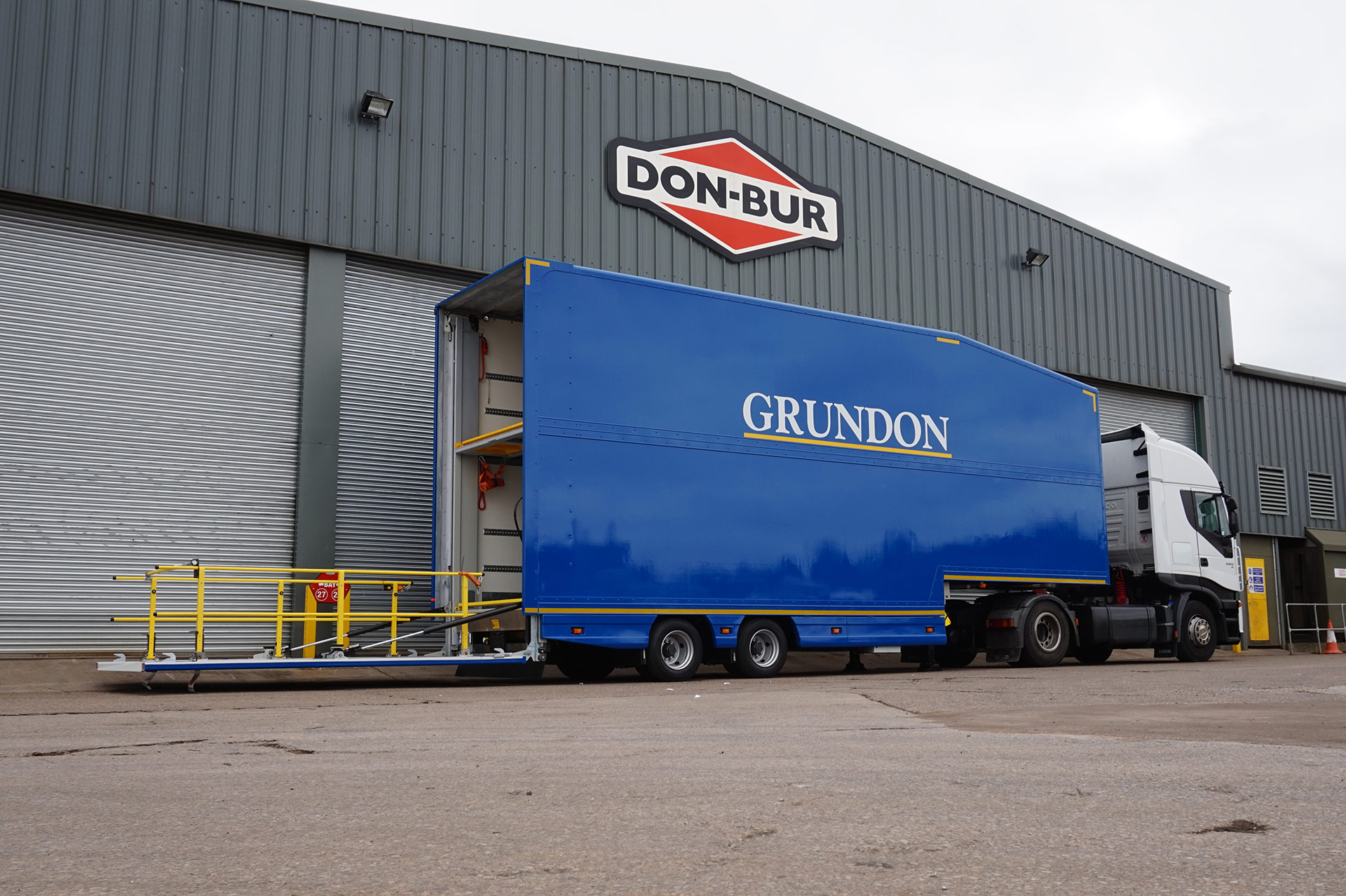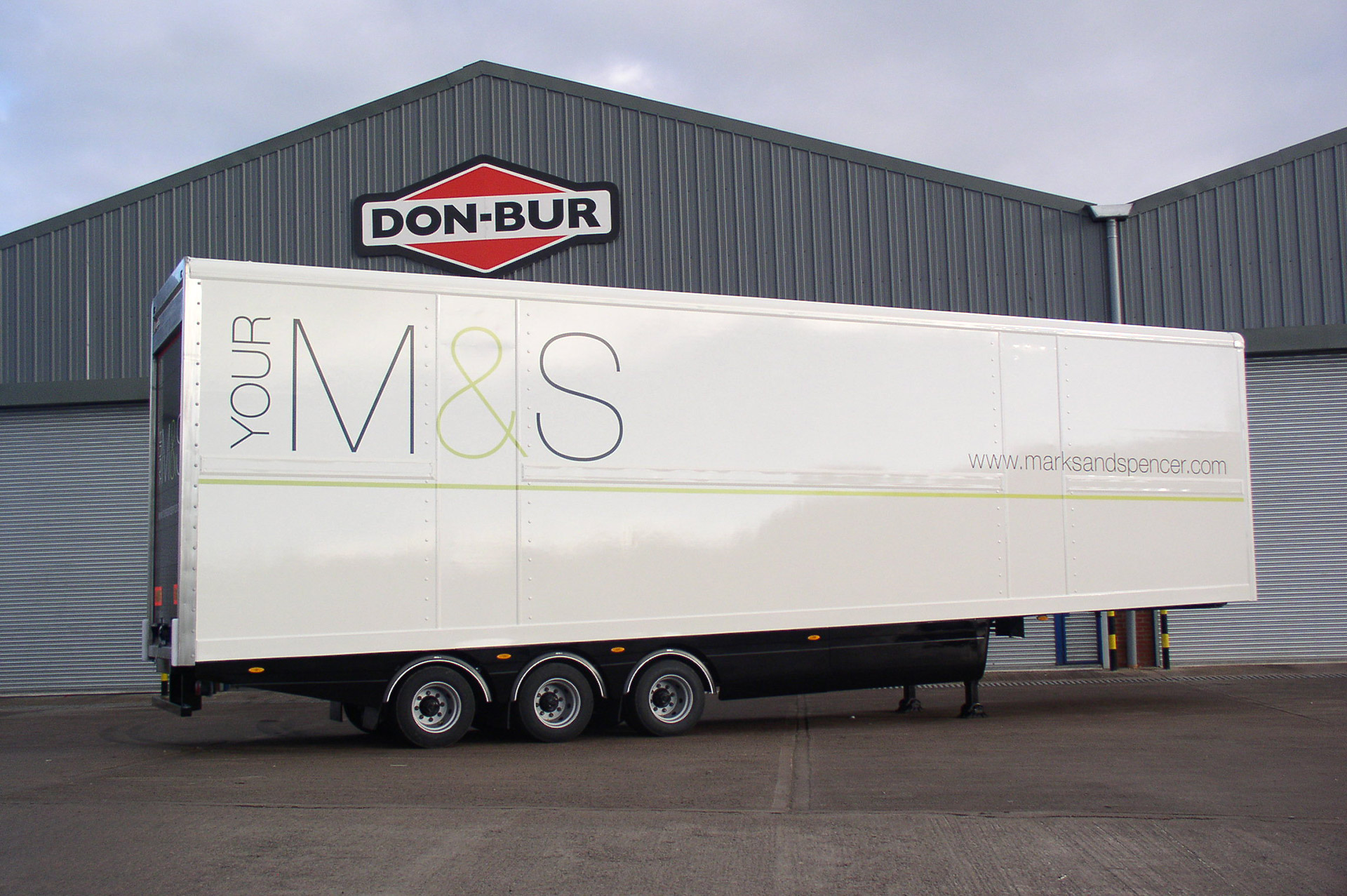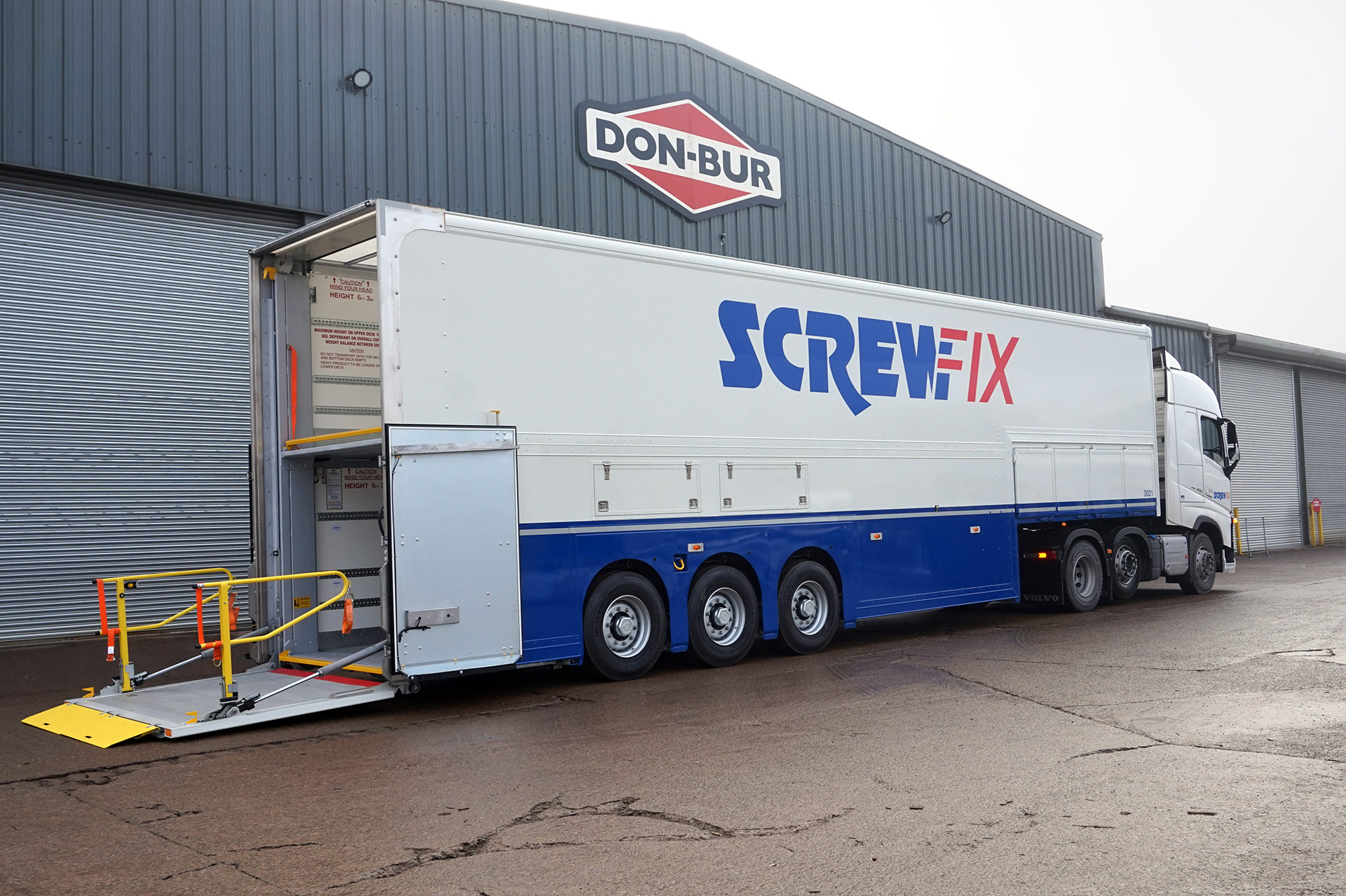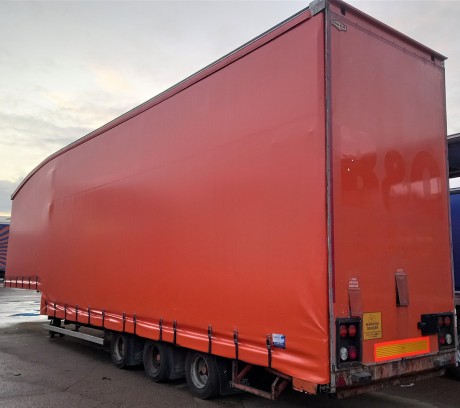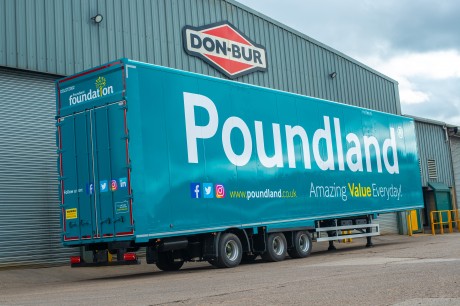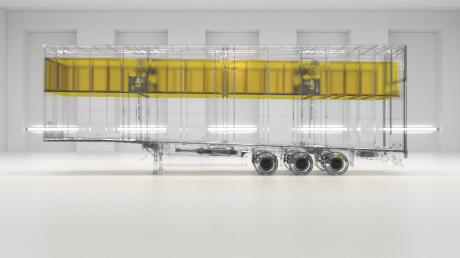
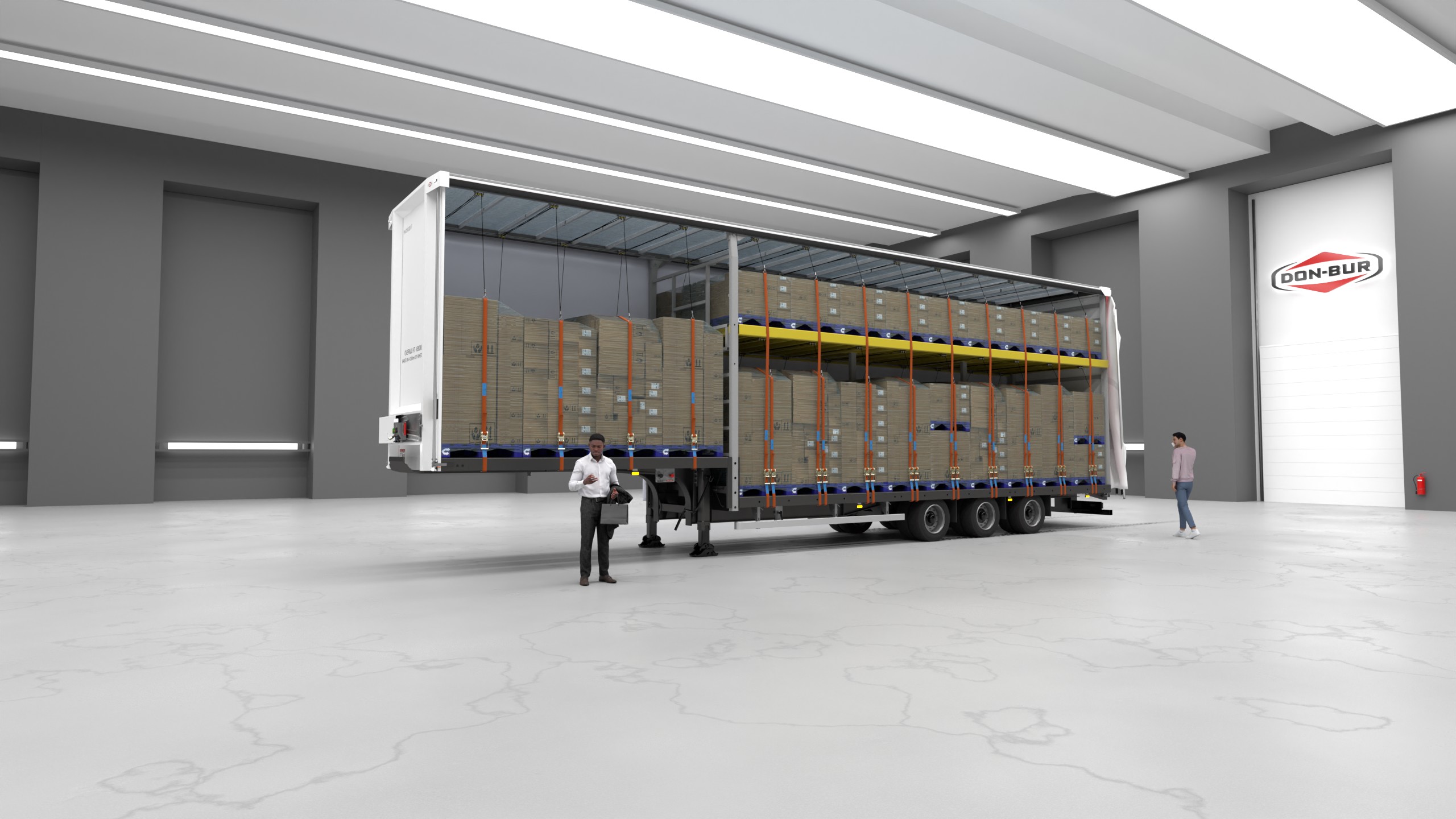
Double deck trailers are designed to move more volume per journey by adding a second load platform within the same overall vehicle envelope. They are typically used on primary trunking routes where volume, rather than weight, limits capacity. By increasing pallet count per trip, they can reduce journey frequency, fuel consumption and total fleet asset requirements.
Don-Bur has developed double deck solutions since the mid-1980s, supplying high-volume builds to major UK FMCG and logistics operators. Configurations include fixed decks, pallet-network layouts, ratchet decks and hydraulic lifting decks. Each specification is engineered around route risk assessments, site clearances, load profile and operational handling methods so that internal volume, deck apertures and unladen weight are balanced against payload and durability.
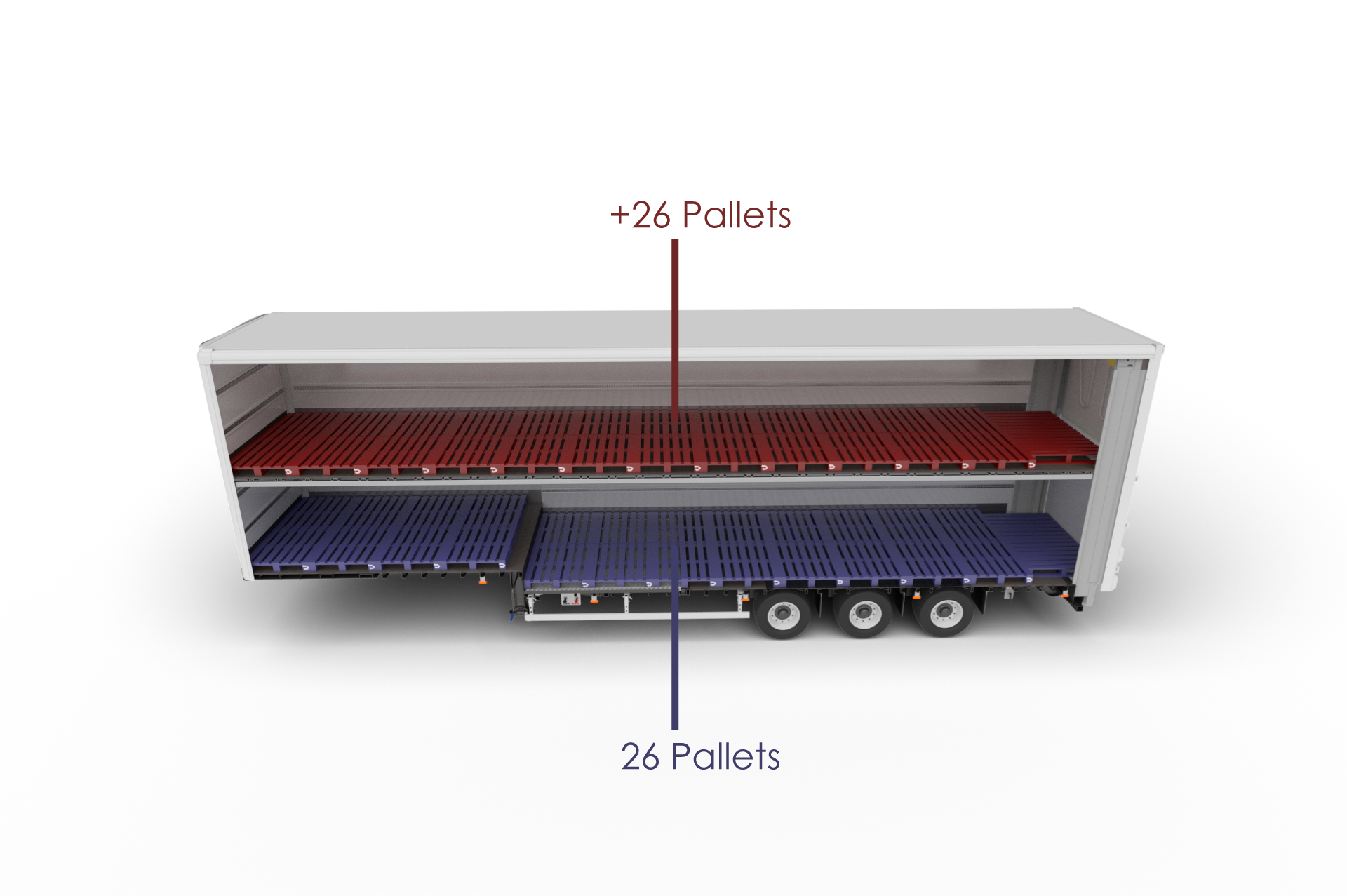
Key fact: A typical 13.6 m double deck trailer carries 52 UK pallets (26 upper and 26 lower). Longer Semi-Trailer variants can carry up to 60 pallets, subject to route approval and bay compatibility.
Design and operational features
Double deck trailers are engineered to maximise usable internal cube while maintaining structural integrity and operational reliability on high-mileage trunking routes.
- Optimised load geometry: deck position, body height and chassis layout configured around pallet size and handling method.
- Reduced tare weight: structural design and material selection focused on lowering unladen weight to preserve payload.
- Deck system flexibility: fixed, ratchet and hydraulic lifting mechanisms available in full-length or partial configurations.
- High pallet capacity: up to 52 UK pallets in standard length builds, with LST variants offering increased volume.
- Durability for trunking: chassis and body structures specified for repeated dock cycles and sustained motorway operation.
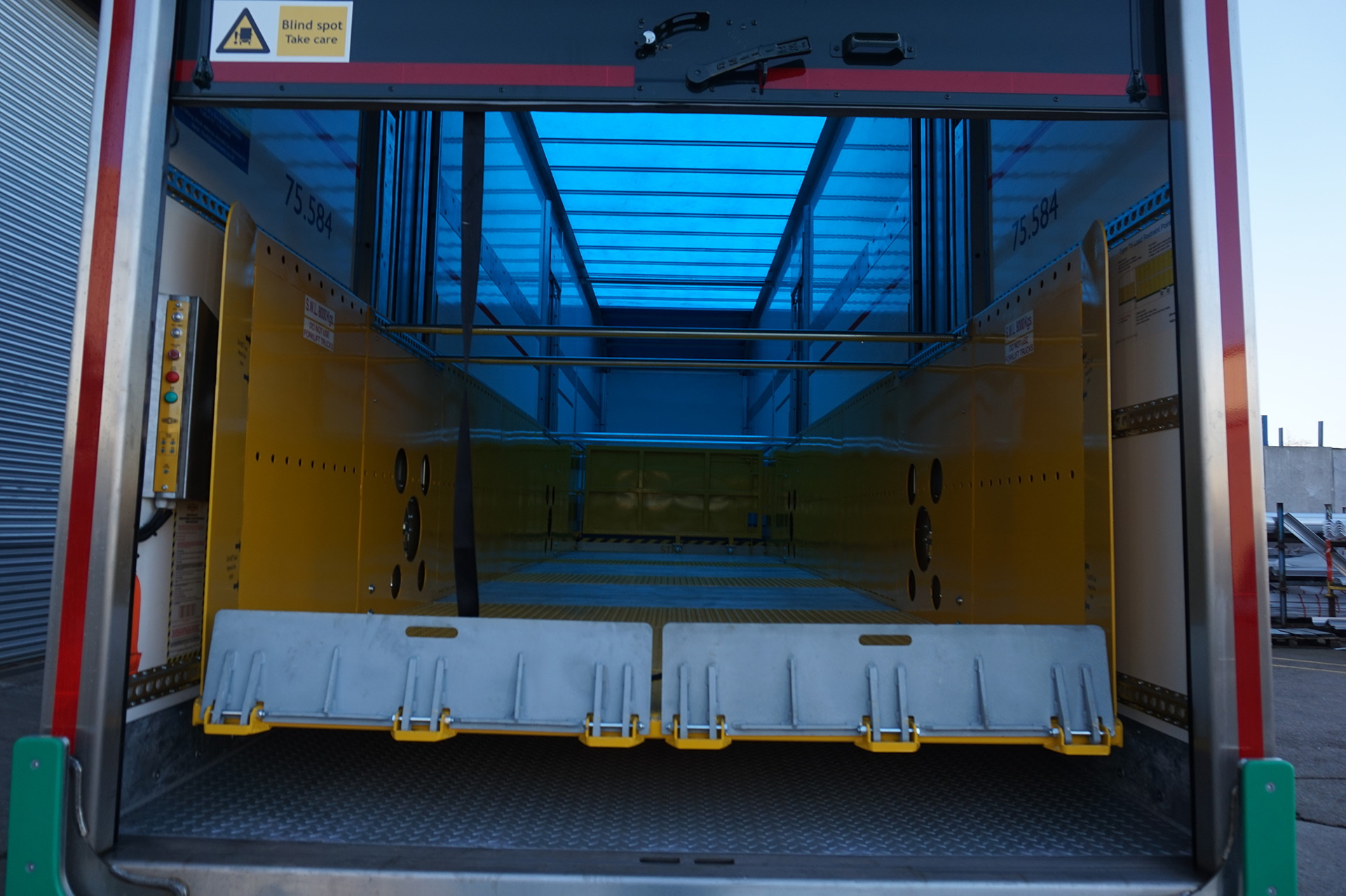
- Safe loading interfaces: interlocks, controlled deck movement and tailored apertures to support efficient and safe handling.
- Two-tier tail-lift options: enabling loading and unloading of upper deck freight where dock facilities are not available.
Deck types
Deck configuration is determined by freight consistency, handling equipment and site constraints.
Fixed and pallet-network decks
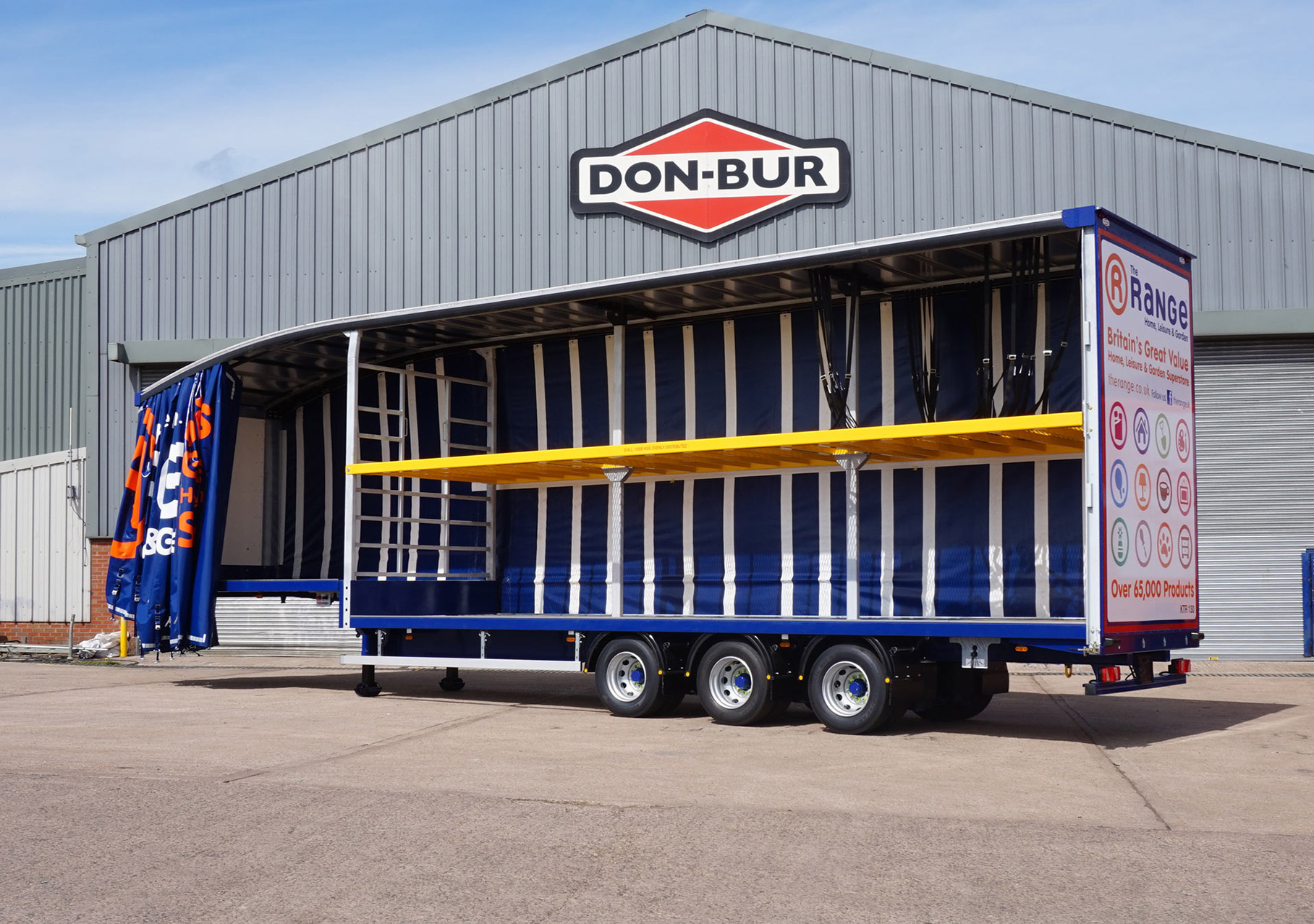
A permanent upper floor providing consistent deck heights for repeat trunking operations. Common in pallet network fleets where a predictable pallet profile is required but flexibility remains for stillages and irregular freight.
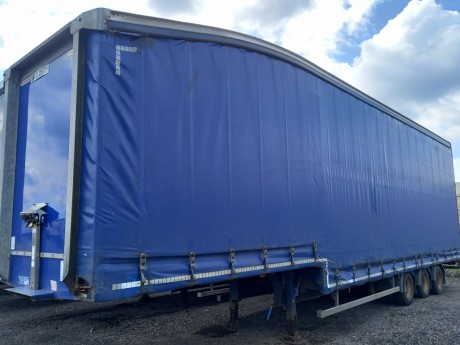
Typical configuration: a 13.7 m tri-axle step-frame curtainsider with an upper deck over the rear two-thirds of the trailer, leaving the swan-neck area open for taller loads. This layout typically accommodates 44 UK pallets.
Lifting decks
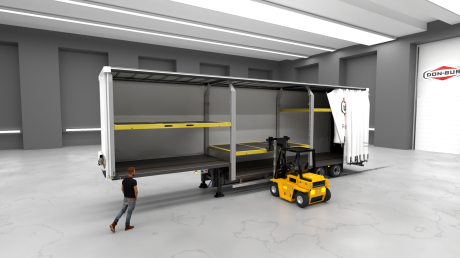
A hydraulically raised upper platform loaded at dock height and then elevated to create space beneath. Suitable for operations requiring maximum bay flexibility and efficient turnaround.
Ratchet decks
A forklift-positioned, multi-level upper deck system. Provides mechanical simplicity for mixed pallet heights without hydraulic systems.
Wedge and urban variants
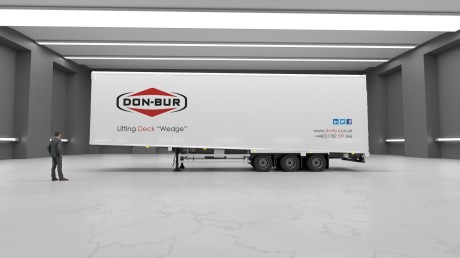
Wedge geometry increases internal clearance toward the rear for PPT use, tall pallets or roll cages. Urban double decks are dimensionally optimised for restricted access environments and can be specified as curtainsider or box van with appropriate steering configurations.
Specialised configurations
Where operations fall outside standard pallet profiles, bespoke double deck solutions can be engineered to suit site and load constraints.
- Chassis geometry: independent suspension and drop-frame layouts to refine deck heights and aperture clearances while maintaining stability.
- Advanced deck mechanisms: butterfly, revolving or removable upper sections for irregular or out-of-gauge items.
- Integrated access systems: tailored apertures, compatible tail-lifts and restraint options matched to handling processes.
- Duty-cycle validation: specification aligned to expected mileage, dock frequency and loading method.
Key dimensions
The table below outlines typical sample dimensions and UK pallet capacities for common double deck trailer configurations.
Dimensions are indicative and subject to final engineering confirmation.
Assumed fifth wheel height: 1.25 m.
Split apertures (Lower/Upper) vary according to deck position. Increasing lower aperture height proportionately reduces upper aperture height.
"Apertures" refer to side apertures for curtainsiders and internal apertures for box vans.
| Body Type | Length x Height | Chassis Type | Deck Type | Wheel size | UK Pallets | Aperture Height: Swan-Neck | Aperture Heights: Main (Lower/Upper) |
|---|---|---|---|---|---|---|---|
| Curtainsider | 13.7 x 4.92 | Step-Frame | Fixed to rear 2/3 | 19.5" | 44 | 3.35 | 1.815/1.815 |
| Curtainsider | 13.7 x 4.92 | Step-Frame | Fixed Full Length | 19.5" | 52 | 1.415 | 1.815/1.815 |
| Curtainsider | 13.7 x 4.92 | Step-Frame | Lifting to rear 2/3 | 19.5" | 44 | 3.35 | 1.8/1.8 |
| Curtainsider | 13.7 x 4.92 | Step-Frame | Lifting Full Length | 19.5" | 52 | 1.385 | 1.785/1.785 |
| Box Van | 13.6 x 4.92 | Step-Frame | Fixed Full Length | 19.5" | 52 | 1.567 | 1.879/1.879 |
| Box Van | 13.6 x 4.92 | Step-Frame | Lifting Full Length | 19.5" | 52 | 1.579 | 1.891/1.891 |
| Box Van | 13.6 x 4.92 | Step-Frame | Lifting Full Length | 17.5" | 52 | 1.504 | 1.966/1.966 |
| Curtainsider | 13.7 x 4.92 | Straight-Frame | Lifting Full Length | 22.5" | 52 | 1.6/1.6 |
FAQs
How tall are double deck trailers?
Most UK double decks run between 4.88 m and 4.95 m overall height, depending on route risk assessments, site clearances and operator policy. Internal deck heights vary by trailer type and specification.
How many pallets fit on a double deck?
A standard 13.6 m double deck typically carries 52 UK pallets (26 upper, 26 lower). LST builds can carry up to 60, subject to specification and bay compatibility.
Find out exactly how many pallets you can fit onto your trailers
Legally, what is the biggest trailer in the UK?
The standard semi-trailer length is 13.6 m. Longer Semi-Trailers (LSTs) are now permitted up to 15.65 m, but only under approved routes and operating conditions.
What payload weight can I carry on a trailer?
Payload depends on gross vehicle weight limits, trailer design and bodywork options. Double decks are usually volume-limited rather than weight-limited, as their capacity is driven by pallet count more than mass.
Discover what governs payload weight and how much you can load
Testimonials
We are delighted that by working in partnership with Don-Bur and TIP we have developed a trailer that meets our operational, safety and environmental needs. It gives us greater efficiency whilst reducing our impact on the environment.
Ian Keilty, Chief Executive Officer, Whistl
“The investment in our fleet is part of the infrastructure upgrade the business requires to support growth. However this is also an opportunity to ensure drivers are equipped with the latest technology to ensure their safety and that of the public.”
— DHL
Indicative pricing & availability
Price: P.O.A.
Available to pre-order