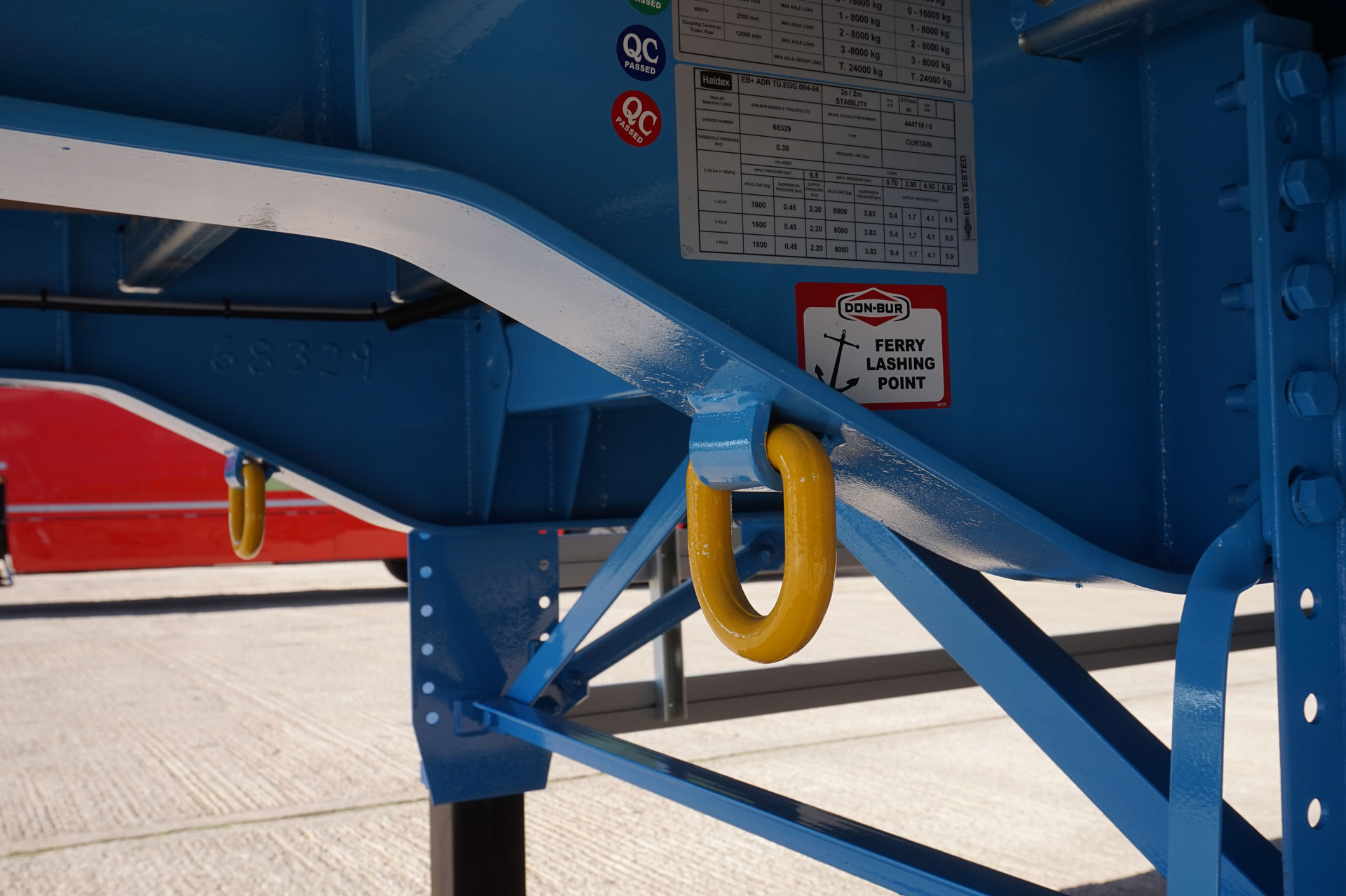
Ferry lashing rings form part of the RORO (Roll-On / Roll-Off) specification for trailers that regularly travel by sea. They provide secure tie-down points so trailers can be lashed to a vessel’s deck during crossing, ensuring stability and compliance with ferry-operator requirements.
Typical layout on a semi-trailer
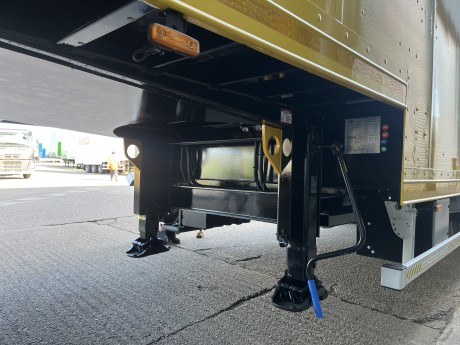
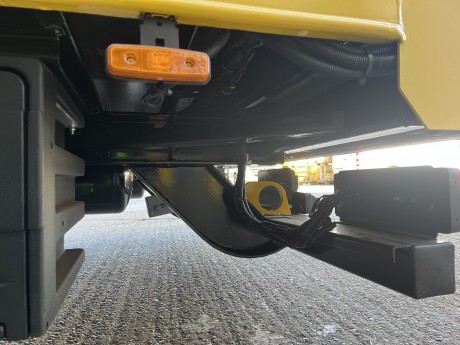
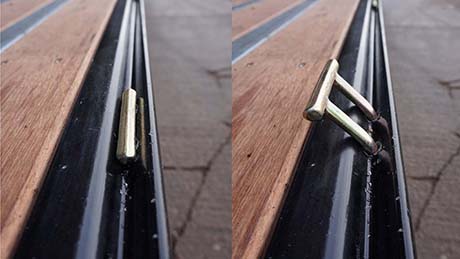
- The standard RORO fitment includes four pairs of fixing points — three pairs of lashing rings plus two additional mounting points near the bed plate. These forward points are not strictly rings but are reinforced anchor positions used by many ferry operators.
- Positions are arranged to maintain ideal lashing angles and to keep clear of landing legs, running gear, wiring and pipework.
- Each pair is normally supplied with high-visibility decals to help deck crews identify the correct lashing points quickly and safely.
Key benefits
- Compliance: Supplied as part of the standard RORO trailer specification to meet operator requirements across UK and European ferry routes.
- Safety: Reinforced, rated fixing points prevent misuse of non-structural components during lashing.
- Efficiency: Clearly marked, standardised layouts speed up embarkation and disembarkation.
- Durability: Heavy-duty welds provide long service life.
Usage guidance
Ferry lashing rings and RORO fixings are intended solely for vessel securing. They should not be used as load-restraint points for cargo. Always follow the ferry operator’s published instructions on the number of lashings, lashing angle and chain tensioning method.
Inspection & maintenance
- Before crossing: Ensure all rings and bed-plate fixings are clear of debris, undamaged and corrosion-free.
- Routine maintenance: Include in regular PMI schedules — inspect welds, fixings and decal condition.
- Repair: Replace any deformed or excessively worn components.
Compatibility
- Available across curtainsider, box van, double-deck and LST trailer ranges, where RORO specification is required.
- Layout and type can vary depending on wheelbase, landing-leg arrangement, bogie position and underrun design.
To enhance our content, some features in the Don-Bur library may include information from trusted third parties. We encourage you to perform your own research and seek additional advice before making any investment or financial decisions based on the information provided. Don-Bur assumes no responsibility for the accuracy, completeness, or timeliness of third-party information.