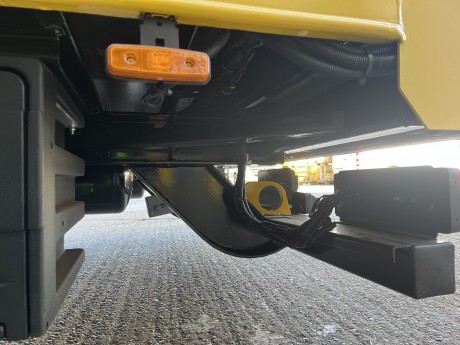
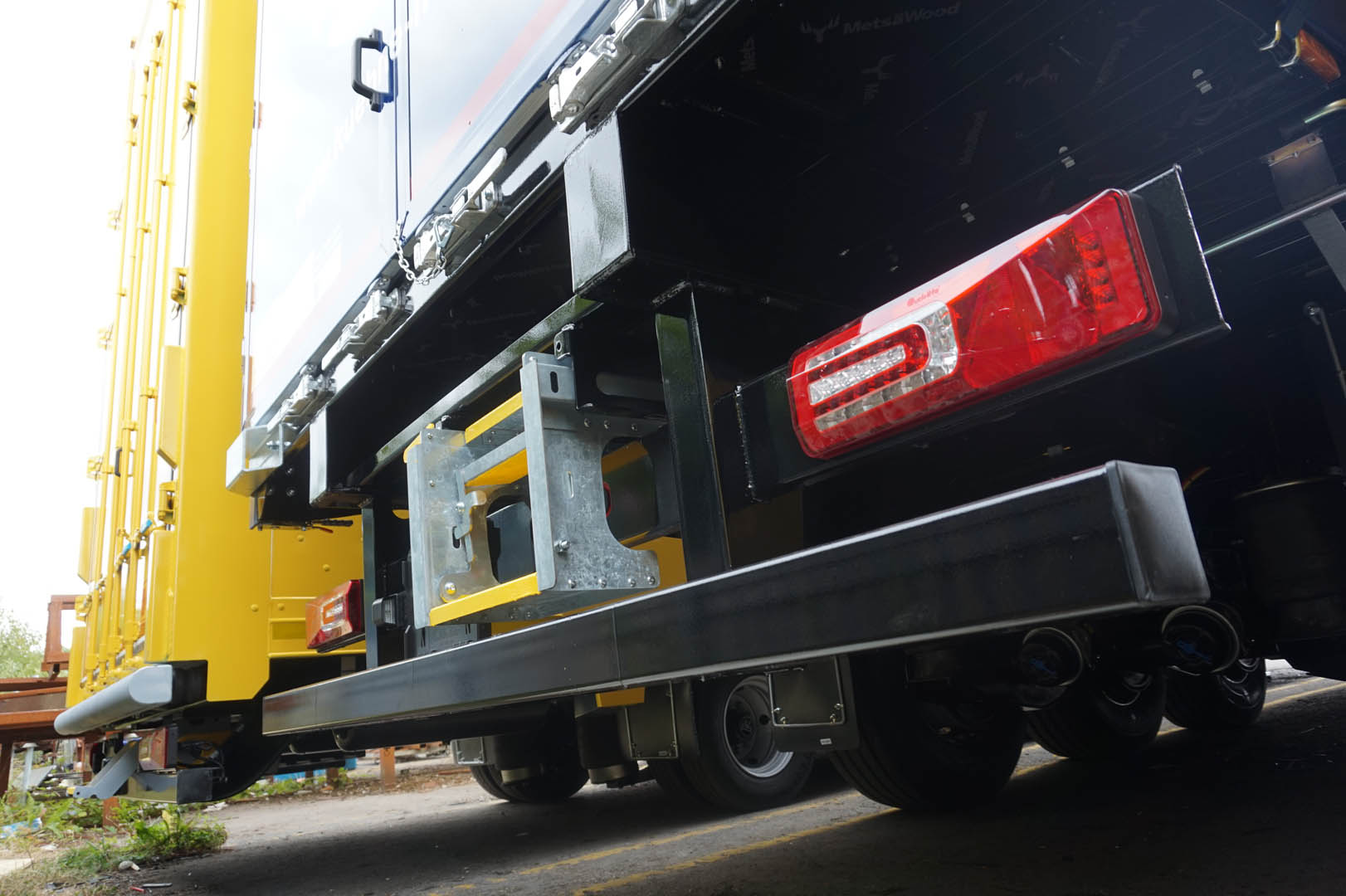
An underrun, more formally referred to as a rear underrun protection device (RUPD), is a structural safety component fitted to the rear of a trailer or rigid-bodied goods vehicle. Its primary function is to prevent smaller vehicles from travelling underneath the rear structure of a larger vehicle in the event of a rear-end collision.
Purpose of a rear underrun protection device
Rear underrun protection plays a critical role in reducing the severity of collisions between passenger cars and larger commercial vehicles. Without effective protection, a car can under-ride the chassis of a truck or trailer, allowing impact forces to bypass the vehicle’s primary crash structures.
Correctly designed underrun protection helps to:
-
Reduce passenger compartment intrusion: By providing a load-bearing interface at the correct height, the underrun device engages with a car’s crumple zones rather than allowing intrusion into the passenger compartment.
-
Control impact behaviour: A compliant underrun structure can limit vehicle pitch and rotation during a collision, reducing the likelihood of severe secondary impacts.
Types of rear underrun protection
Rear underrun protection systems vary in design depending on vehicle application, operating environment, and regulatory requirements. Common configurations include:
-
Rigid steel underrun bars: Typically fabricated from high-strength steel sections and mounted directly to the rear chassis or body structure. These remain the most widely used solution for heavy trailers and rigid vehicles.
-
Energy-managed underrun systems: Designed to deform in a controlled manner under load, helping to dissipate impact energy while maintaining structural integrity.
-
Removable or hinged underruns: Used where operational access is required, such as on specialised or municipal vehicles, while still meeting regulatory performance criteria when deployed.
Regulations and standards
In the UK and across UNECE-adopting countries, rear underrun protection for new vehicles is governed by UNECE Regulation No. 58 Revision 03 (UNECE R58-03).
UNECE R58-03 defines minimum performance requirements verified through physical testing rather than prescribing a specific design. Key areas covered include:
-
Minimum strength and load resistance under defined test conditions
-
Maximum permitted ground clearance, typically 450 mm when the vehicle is unladen
-
Minimum lateral coverage relative to overall vehicle width
-
Performance requirements for mounting structures and fixings
Compared with earlier revisions, R58-03 introduces higher test loads and tighter deformation limits, improving real-world crash performance. The regulation does not mandate a specific bar size or cross-section; compliance is demonstrated by meeting the stated performance criteria.
Why rear underrun protection matters
Effective rear underrun protection is a proven safety measure that reduces the risk of fatal and serious injuries in rear-end collisions involving goods vehicles. By promoting controlled load transfer between vehicles of very different mass and ride height, underrun devices form a critical part of modern commercial vehicle safety design.
Frequently asked questions
What does UNECE R58-03 apply to?
UNECE R58-03 applies to new goods vehicles and trailers within the relevant weight categories that require rear underrun protection as part of type approval in UNECE-adopting countries, including the UK.
Does UNECE R58-03 require a 200 mm square underrun bar?
No. UNECE R58-03 does not specify a fixed bar size or cross-section. It sets performance and test requirements that can be met using different designs, provided the underrun system passes the required strength and deformation tests.
Are older trailers required to comply with R58-03?
R58-03 applies to new type approvals. Existing vehicles approved under earlier regulations may remain legally compliant, although newer standards are often specified by operators for safety and fleet consistency.
Is rear underrun protection mandatory in the UK?
Yes. Rear underrun protection is a mandatory safety requirement for applicable goods vehicles and trailers, with UNECE R58-03 forming the current approval standard for new vehicles.