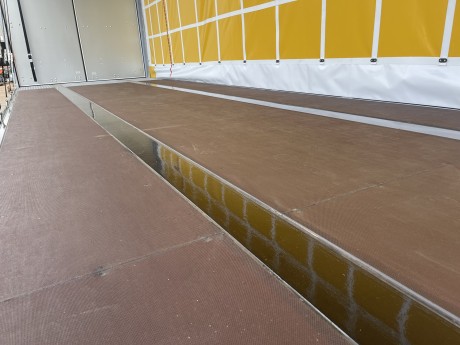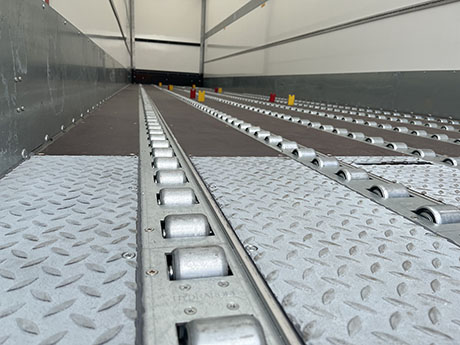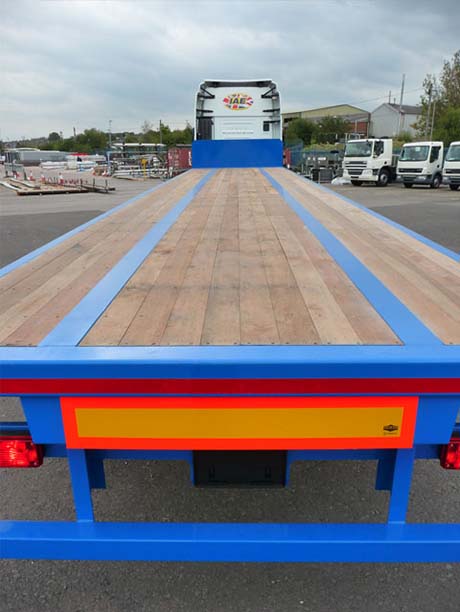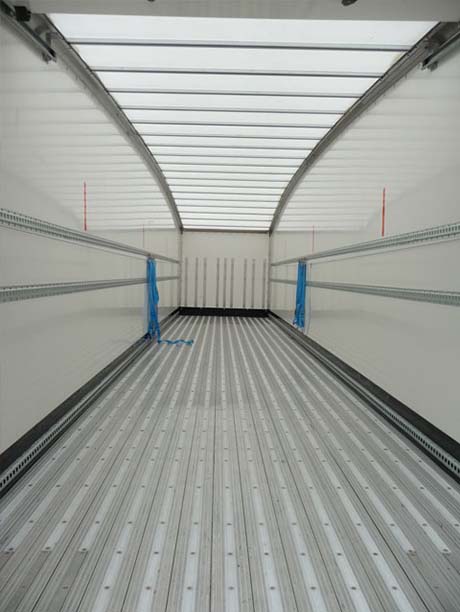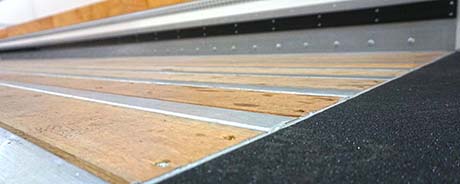
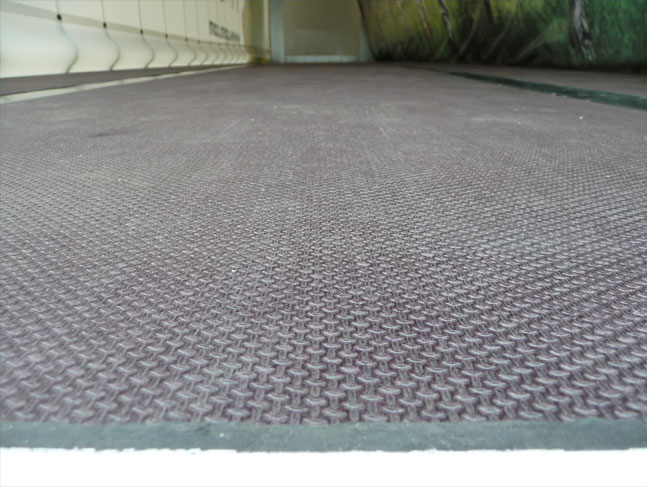
Bonded floors are, as their name suggests, bonded to the cross-bearers rather than fixed with screws. This process has two key benefits.
Firstly, due to the nature of the bond, the floor forms a stronger part of the vehicle structure and you can reduce the amount of steelwork elsewhere. This can be very useful when achieving super-lightweight trailers or rigid bodywork.
Secondly, a bonded floor is particularly suited to loads that are susceptible to scuffing, such as paper reels. As the floor is bonded underneath, there are no fixings sitting proud to damage the load.
To enhance our content, some features in the Don-Bur library may include information from trusted third parties. We encourage you to perform your own research and seek additional advice before making any investment or financial decisions based on the information provided. Don-Bur assumes no responsibility for the accuracy, completeness, or timeliness of third-party information.
We’d love to hear from you – get in touch today!