Commercial vehicle flooring must withstand heavy loads, impact forces and regular operational wear. Two widely used options are keruing hardwood planks and laminated hardwood flooring.

Keruing hardwood flooring
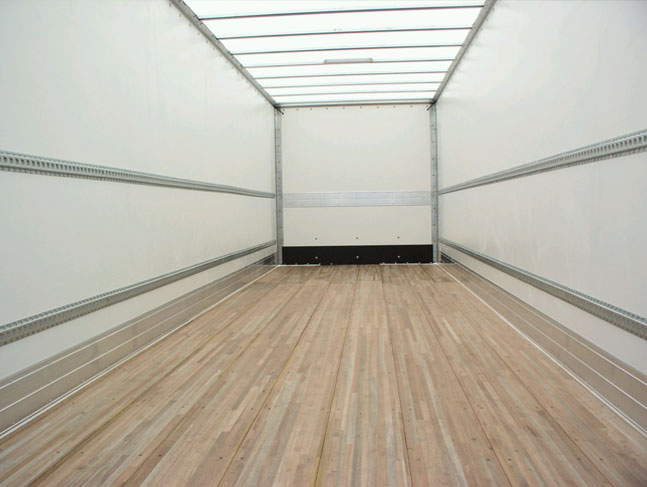
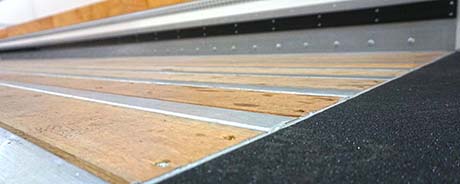
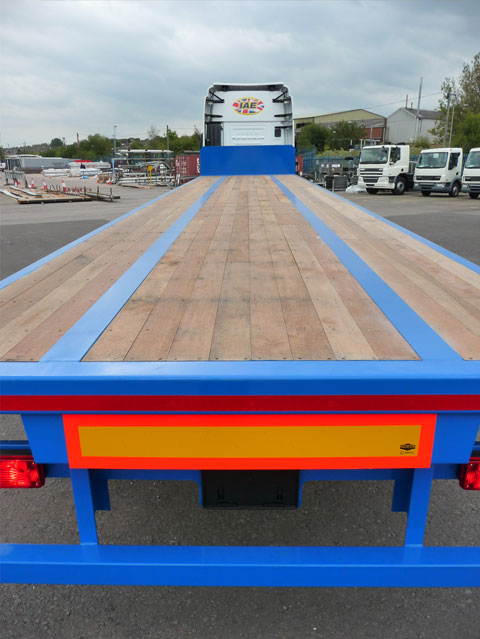
Keruing flooring consists of lengths of treated hardwood planks selected to match the required thickness and loading characteristics of the vehicle. Its density and strength make it a proven option for heavy-duty applications.
"Average dried weight: 46 lb/ft^3 (745 kg/m^3). Janka hardness: 1,390 lbf (6,170 N)."
The Wood Database – Wood-Database: Keruing
Keruing is commonly supplied for transport flooring thanks to its combination of durability, density and resistance to wear.
Laminated hardwood flooring
Laminated hardwood flooring differs from solid keruing planks in that each board is engineered from multiple bonded layers. This construction improves stability and can offer increased strength under variable moisture and load conditions.
Comparison: key considerations
- Strength: Keruing offers reliable load-bearing performance. Laminated boards may enhance strength and resistance to deformation.
- Dimensional stability: The layered structure of laminated flooring reduces shrinkage or movement compared with single-layer planks.
- Durability: Both flooring types are suitable for commercial bodywork, with keruing widely used in heavy-duty environments.
- Responsible sourcing: As with any hardwood product, specifying FSC or PEFC-certified material helps support legal and responsibly managed supply chains.
- Fitment and maintenance: Proper sealing, bearer spacing and fastening remain essential for long-term performance, regardless of material choice.
As natural timber products, both keruing and laminated hardwood flooring lack a defined technical point-load rating. Actual performance varies with board thickness, grain orientation, moisture content and the supporting bearer structure.
Alternative flooring options
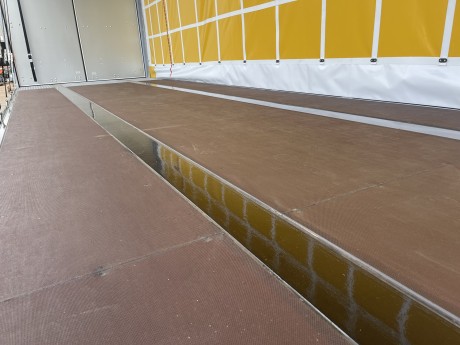
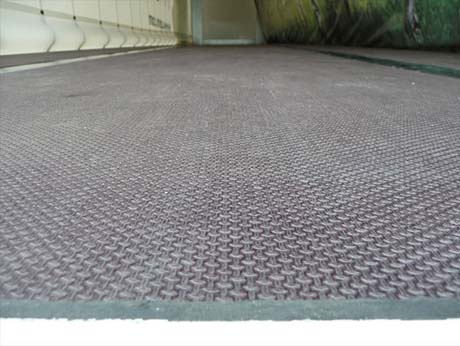
Alongside hardwood solutions, many operators specify phenolic-coated plywood as a standard flooring material. Products such as WISA and Metsa boards offer consistent manufacturing quality and a durable resin-coated surface that provides good resistance to moisture and abrasion.
This type of plywood is engineered from cross-laminated veneers, giving predictable structural behaviour and allowing suppliers to publish formal performance data, including load information when used within specified bearer spacings.
Which option is most suitable?
Selecting the right flooring depends on the operational demands of the vehicle, including load intensity, environmental exposure and maintenance expectations. Keruing offers dependable, traditional performance. Laminated hardwood flooring may be preferred where engineered stability or predictable moisture behaviour is required, while phenolic-coated plywood provides a widely adopted, data-backed alternative.
Summary
Keruing hardwood flooring provides a robust, solid plank solution for vehicle bodywork. Laminated hardwood flooring enhances performance through its multi-layer construction. Phenolic-coated plywood boards offer a more standardised, engineered flooring option with published performance data. Each has a role in commercial applications, and the best choice depends on operational requirements, sourcing preferences and integration with the vehicle structure.
What is keruing flooring?
Keruing flooring consists of treated hardwood planks used in heavy-duty vehicle bodywork. It offers high density and reliable performance under load.
How does laminated hardwood flooring differ from solid hardwood?
Laminated hardwood planks are built from multiple bonded layers, improving strength and reducing movement compared with traditional single-layer boards.
Is certified hardwood available?
Yes. Hardwood flooring products can be specified with FSC or PEFC certification to support legal and responsible sourcing practices.
Which flooring type should I choose?
For typical heavy-duty use, keruing flooring provides a proven solution. Laminated hardwood may be preferred where enhanced stability or engineered performance is required, and phenolic-coated plywood is a common alternative where standardised performance data is important.
Are phenolic-coated plywood boards a common alternative?
Yes. Phenolic-coated plywood products, including well-known brands such as WISA and Metsa, are widely used for commercial vehicle flooring and offer a resin-coated surface with predictable structural behaviour.
To enhance our content, some features in the Don-Bur library may include information from trusted third parties. We encourage you to perform your own research and seek additional advice before making any investment or financial decisions based on the information provided. Don-Bur assumes no responsibility for the accuracy, completeness, or timeliness of third-party information.