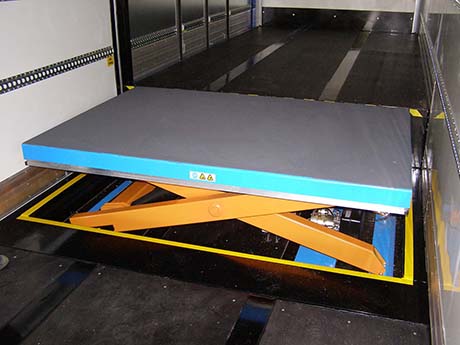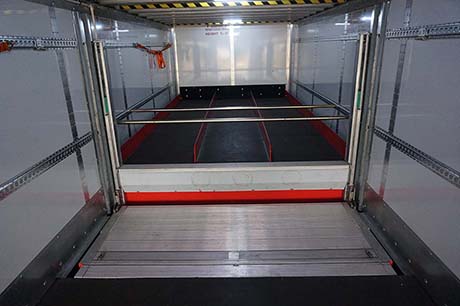
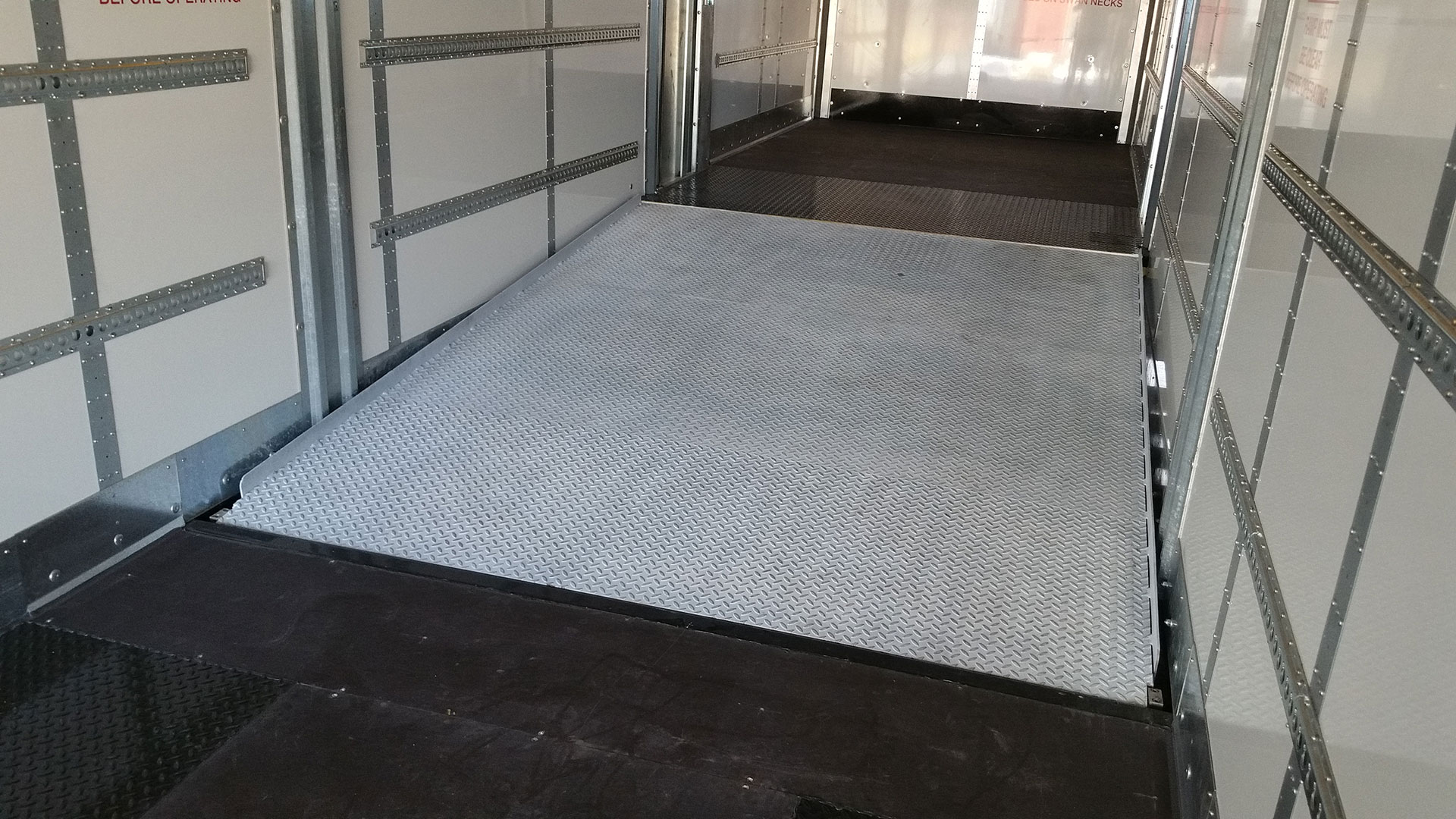
Access to the swan-neck has always been challenging and could be overcome with an internal tail-lift.
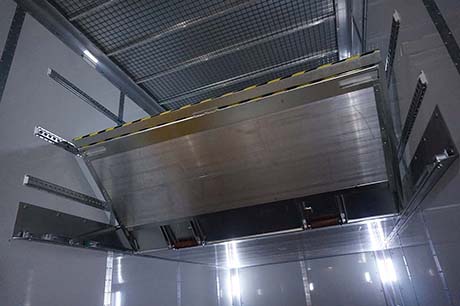
Don-Bur manufactures a long flip-up pneumatic floor ramp to enable easy access for both personnel, pallet trucks and cages.

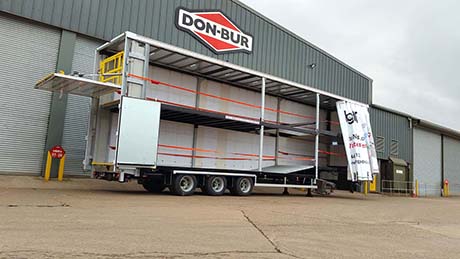
For double deck trailers, a corresponding flip-up deck section can also be specified to ensure maximum and consistent head height. After loading/unloading, both the floor ramp (and flip-up deck is applicable) can be lowered again for maximum load fill.
Versions exist for both box vans and curtainsiders (please see links below).
To enhance our content, some features in the Don-Bur library may include information from trusted third parties. We encourage you to perform your own research and seek additional advice before making any investment or financial decisions based on the information provided. Don-Bur assumes no responsibility for the accuracy, completeness, or timeliness of third-party information.
We’d love to hear from you – get in touch today!