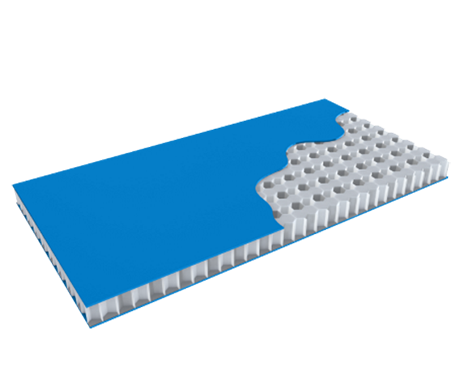
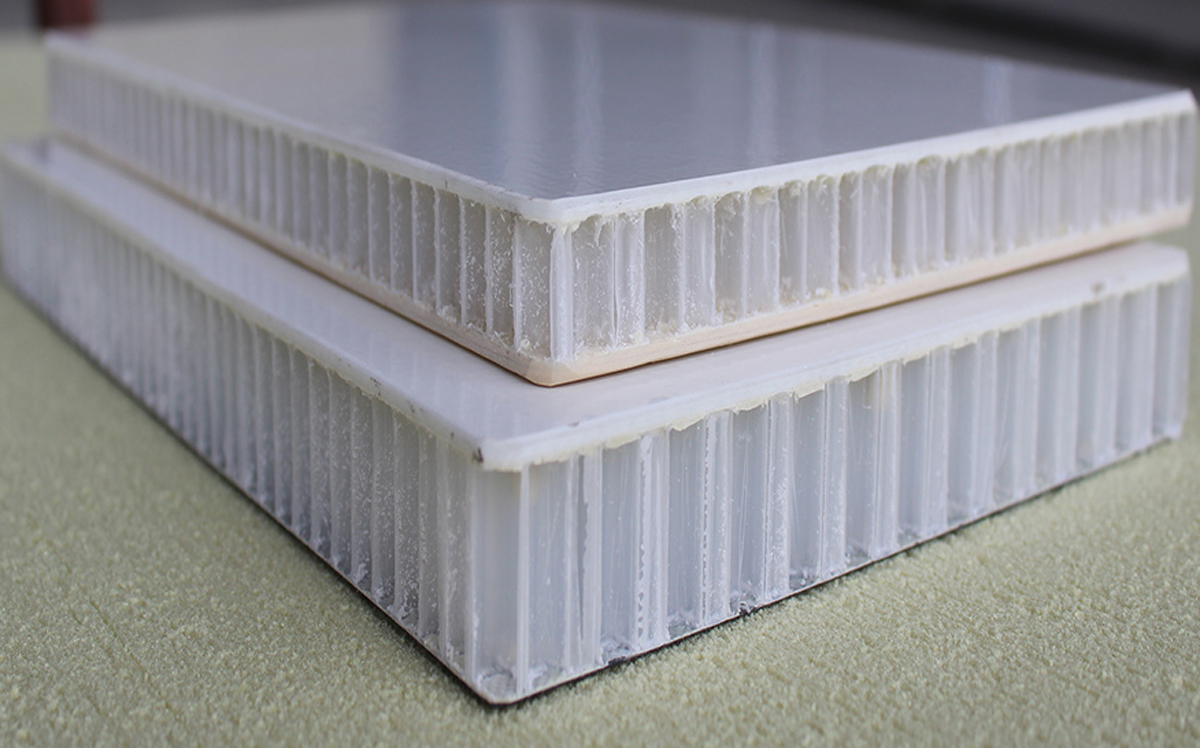
Omnia lightweight panels use a polypropylene (PP) honeycomb core bonded to fibreglass-reinforced polypropylene skins. This creates a rigid, low-weight composite suitable for a range of commercial vehicle and industrial applications.
The panels weigh approximately 4.8 kg per square metre at 30 mm thickness.
Recyclability

The panels are manufactured from thermoplastic polypropylene, meaning they can technically be recycled by specialist facilities capable of shredding and remelting PP composites. However, end-of-life recycling options for PP honeycomb panels in the UK remain limited. Embedded glass fibres reduce the economic value of the recycled material, and most municipal or commercial waste handlers do not accept composite PP sheets.
In practice, disposal typically follows either specialist industrial recycling where available, or controlled energy-recovery routes such as incineration or co-processing.
Flammability
The material exhibits an active, self-fuelling flame behaviour. The skins incorporate glass reinforcement, which provides some retardant properties but does not prevent combustion.
Environmental Effect
Rigidity varies with temperature. Elevated heat reduces stiffness, and prolonged UV exposure may degrade the outer surface over time. Routine inspection is recommended where panels are exposed to direct sunlight or high-temperature environments.
Surface
The external face has a dimpled texture that provides moderate grip and abrasion resistance.
FAQ
Are Omnia polypropylene panels recyclable in the UK?
They are technically recyclable because they are thermoplastic PP composites. However, UK recycling infrastructure for PP honeycomb panels is limited, and most end-of-life material is routed to specialist recyclers or energy-recovery processes.
Do the panels require separation of skins and core before recycling?
No. Both the core and skins are PP-based, so specialist facilities can shred and remelt the entire panel without separating layers.
How does heat affect panel performance?
High temperatures reduce stiffness. Applications involving continuous heat exposure should account for potential deflection.
Is UV exposure a concern?
Long-term UV exposure may degrade the outer surface. Regular inspection helps identify early signs of weathering.
To enhance our content, some features in the Don-Bur library may include information from trusted third parties. We encourage you to perform your own research and seek additional advice before making any investment or financial decisions based on the information provided. Don-Bur assumes no responsibility for the accuracy, completeness, or timeliness of third-party information.