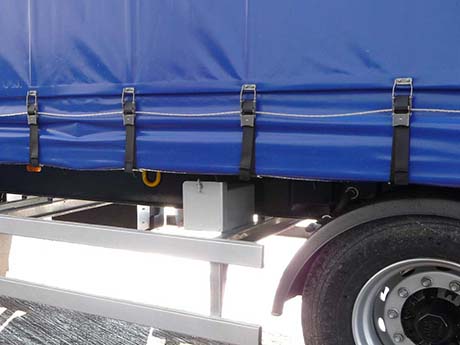
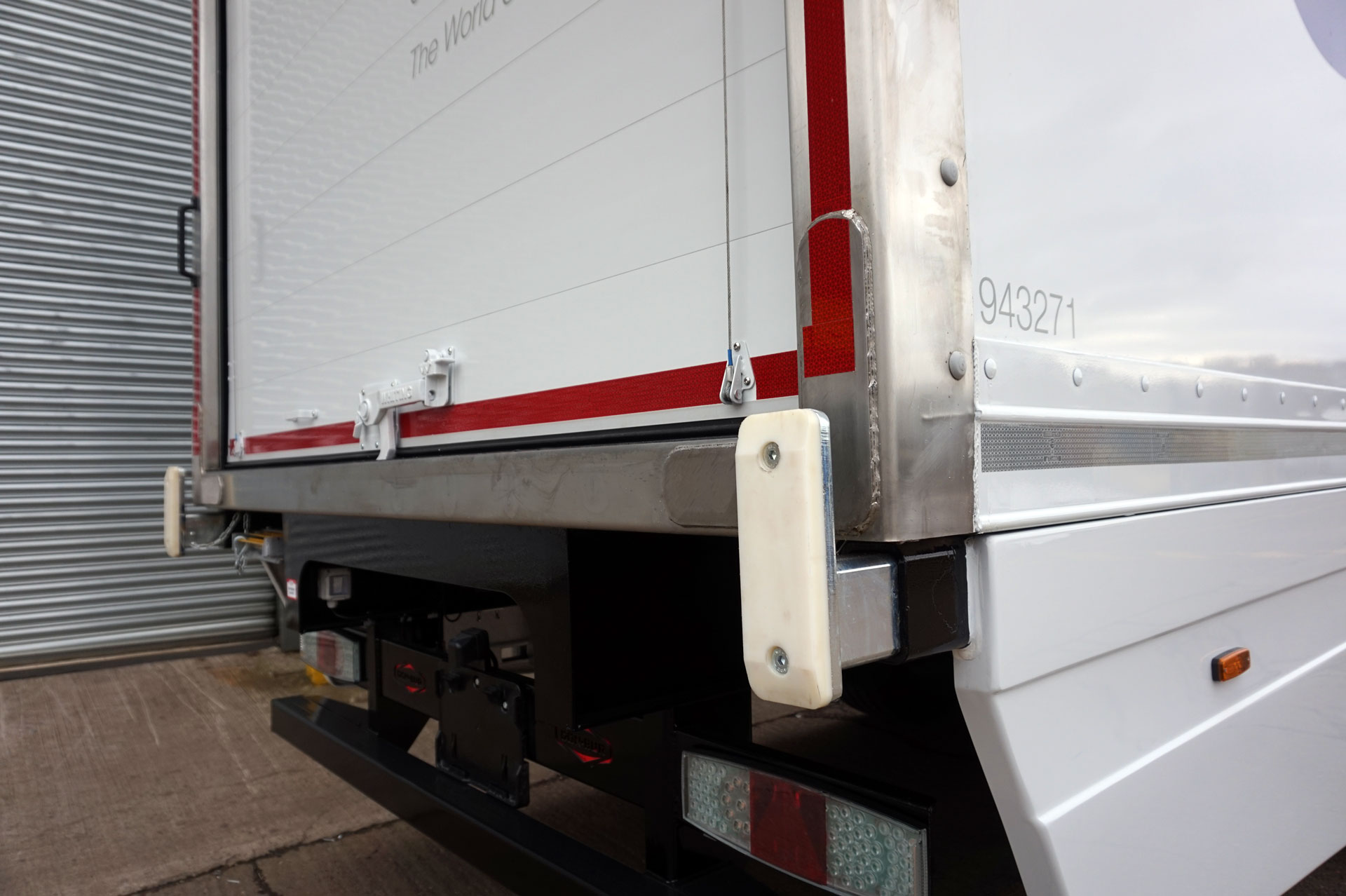
Compression buffers are mounted directly to the trailer chassis rather than the rear frame and are designed to absorb impacts that occur during loading and unloading operations.
When a trailer reverses onto a loading dock, impact forces are generated as the trailer contacts the dock buffers. Without compression buffers, these forces are transferred more directly into the rear frame structure. Although individual impacts may appear minor, repeated docking cycles over many years can contribute to cumulative stress, distortion and wear within the rear frame assembly.
Compression buffers help reduce this effect by introducing a resilient rubber compression element between the docking force and the trailer structure. As the rubber compresses, impact energy is absorbed and distributed over a longer period, reducing peak loads transmitted into the rear frame.
Because the compression buffer assembly is welded directly to the chassis, impact forces are directed into the trailer's primary structural members rather than being concentrated within the rear frame.
Compression buffers are typically fitted with sacrificial nylon wear plates. These plates are designed to work effectively with loading dock buffers while protecting the compression buffer assembly from abrasion and wear. The nylon plates are bolted in place for straightforward replacement when worn.
The nylon wear plates are also commonly profiled to help minimise snagging against dock buffers as the trailer suspension rises and falls during loading operations. This helps maintain smooth trailer movement against the dock while reducing wear on both components.
To enhance our content, some features in the Don-Bur library may include information from trusted third-party suppliers. We encourage operators to perform their own checks and seek additional technical advice before specifying, purchasing or installing any equipment. Don-Bur assumes no responsibility for the accuracy, completeness or timeliness of third-party information.