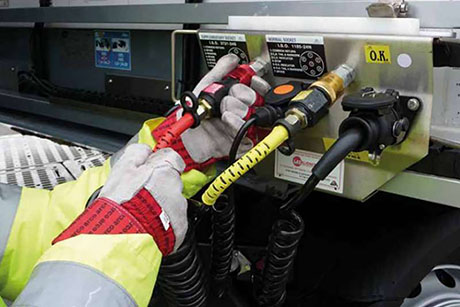
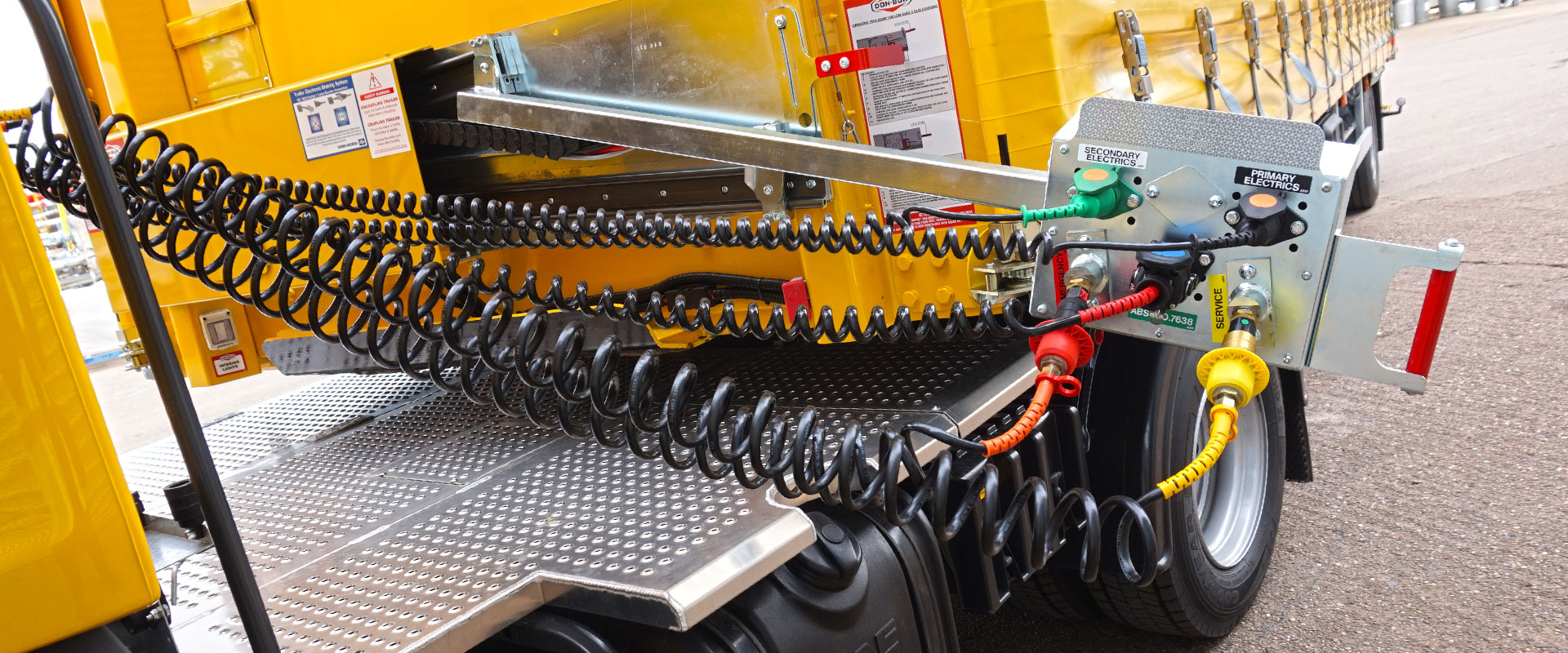
“Suzies” are the coiled air and electrical lines that link a tractor unit to a trailer. They supply braking air and provide the electrical power and communication needed for lighting, electronic braking and related safety systems.
Where the Name “Suzie” Came From
The term originated as a brand name. A range of coiled tractor–trailer connectors was marketed under the “Suzie” trademark (originally by Dana Distribution Europe Ltd, later Unipart). Their spring-like coils resembled a toy called “Susie the Lovable Slinky Worm”, and the name entered common industry language. Although widely used today, “Suzie” remains a defended trademark.
Why Suzie Lines Are Coiled
Suzies are coiled so they can extend and retract as the vehicle articulates. This prevents dragging on the catwalk, pinching between unit and trailer and excess strain on connectors. Correct line length matters: if too short, lines can pull tight when turning; if too long, they can droop and rub, leading to damage.
Types of Suzie Lines
1) Air Lines
| Line | Colour | Function |
|---|---|---|
| Red | Emergency / Supply | Feeds air to charge the trailer brake system. Loss of this line applies the trailer brakes automatically. |
| Yellow | Service / Control | Transmits the pneumatic brake demand signal from the tractor to the trailer brakes. |
2) Electrical Lines
ISO 7638 Line (EBS)
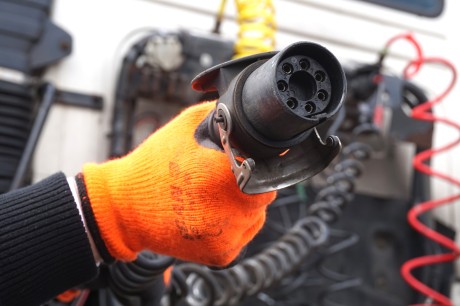
The ISO 7638 line supplies power to the trailer brake ECU and modulator valves and carries CAN communication between tractor and trailer.
If the ISO 7638 line is not connected, ABS/roll stability functions are disabled and the trailer reverts to basic pneumatic braking. A warning lamp will usually appear in the cab.
24N and 24S Electrical Lines
| Connector | Standard | Purpose |
|---|---|---|
| 24N (Normal) | ISO 1185 | Primary trailer lighting circuits. |
| 24S (Supplementary) | ISO 3731 | Auxiliary/ Secondary lighting circuits. |
EU combinations typically use a single 15-pin ISO 12098 plug which combines both 24N and 24S lines.
Routing and Support on the Tractor Unit
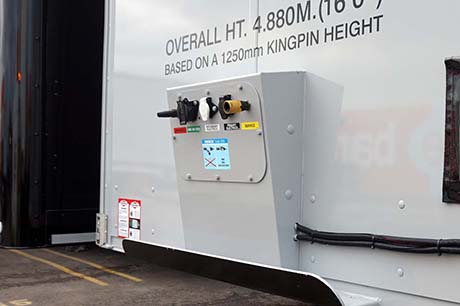
Suzies are normally supported on a frame behind the cab (often called an A-frame, gantry or suzie bar). This keeps the lines clear of the catwalk, maintains correct routing and bend radius, and prevents rubbing damage or excessive tension when turning. Incorrect height or alignment accelerates wear. The A-frame also provides pegs or dummy sockets so the ends of the suzie lines can be stowed securely when the tractor unit is not coupled to a trailer, keeping couplers clean and preventing damage.
Hose End Types (Compatibility, not Procedure)
The hoses are Suzies in both markets, but the fittings differ by region. This affects compatibility when swapping trailers; it does not change the function of the lines.
| Region | Fitting | Notes |
|---|---|---|
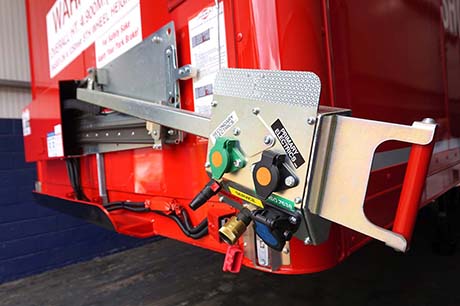
| UK / Ireland | C-type couplings | Collar twist-to-lock style connectors on the air lines. |
| Mainland Europe | Palm (Gladhand) connectors | Flat-face connectors that seal when pressed together. |
For coupling procedures, sequence and full standards comparisons, see our dedicated couplings page.
Best Practice for Suzie Care
- Keep coils free and untwisted
- Ensure lines do not rub on the catwalk or bodywork
- Set A-frame height correctly for natural coil fall
- Inspect for abrasion, heat damage or stretched coils
- Check for warning lamps after coupling
Common Signs of Suzie Issues
- Air leaks (hissing)
- ABS/EBS warnings in the cab
- Intermittent or failed lighting
- Lines dragging, slapping or showing rub marks
For coupling procedures, sequence and full standards comparisons, please refer to the dedicated guide.
HGV Trailer Couplings – Types, Safety & Coupling Procedures.